O, to be in England
Now that April 's there,
And whoever wakes in England
Sees, some morning, unaware,
...
wrote Robert Browning in Home Thoughts, from Abroad and went on to list, in the poem, some of the things you might see and hear in the English countryside on an April morning. But you see them distractedly, "unaware" because you take them for granted; you are "there" and able to see them every day.
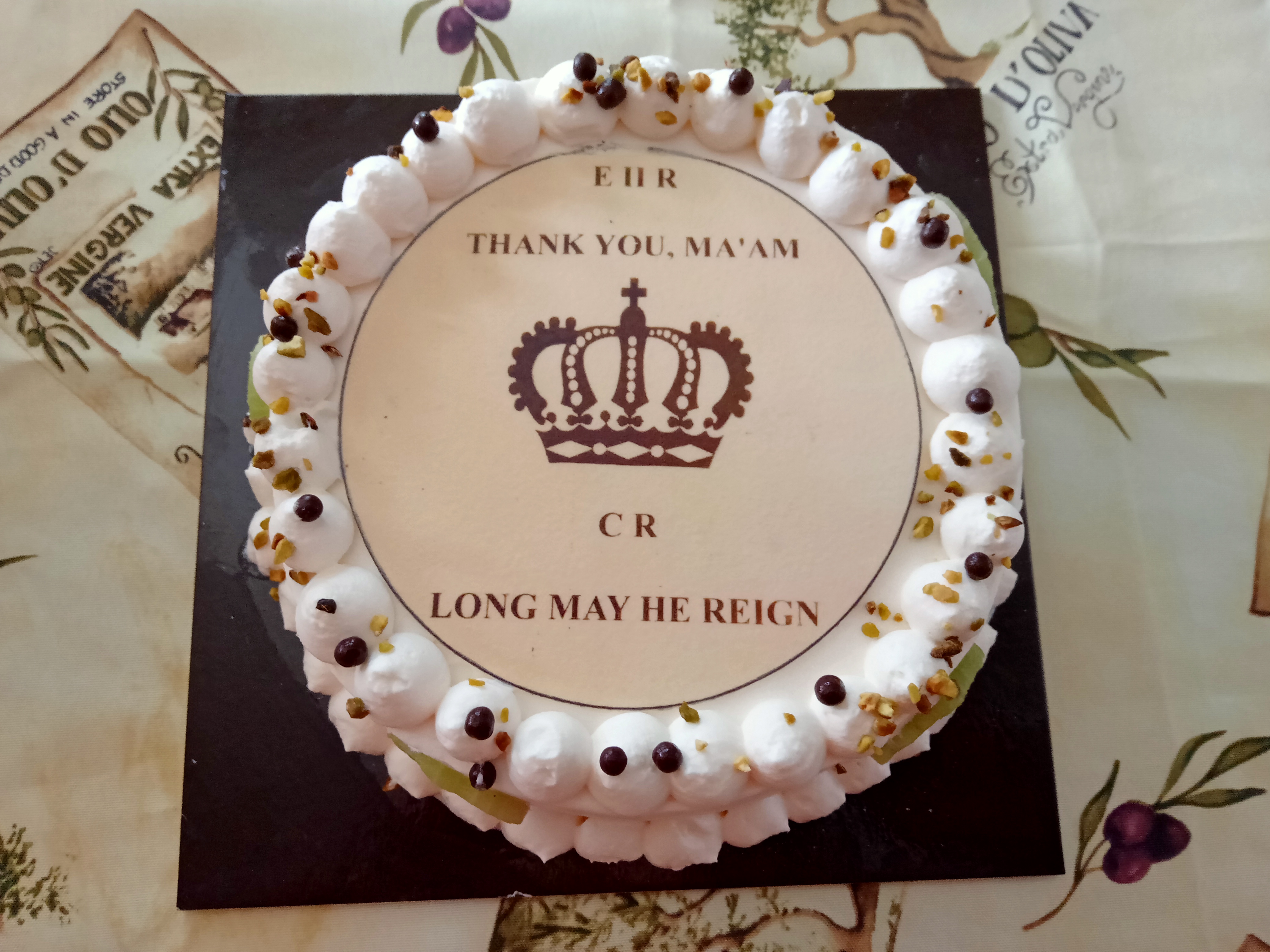
Many words have been written about the momentous events of this week, so, planning this post, I wondered what I could possibly add to what great and renowned writers have already said. I had written about the Queen on this blog only in June, when we were celebrating her Platinum Jubilee, yet that seems a decade ago now. I pondered, wondered again and considered not writing anything at all but then I thought that perhaps I could write about what it is like to be British and hear such news when you are not "there", do not wake in England or one of the other nations of the United Kingdom, cannot totally gauge the atmosphere "there" but suddenly, although you hope you have become bicultural, feel more British than you have for years. And you reel from the impact of the news you have just heard.
On the morning of what began as an ordinary day, Thursday, 8th September, I was looking at the British newspapers online and following certain developments on Twitter when suddenly I read that Her Majesty the Queen had been advised to rest as her doctors were "concerned". Alarm bells did not immediately ring in my head as we had seen Her Majesty accepting the resignation of one Prime Minister only on Monday and she had appointed the new one on Tuesday. In the photos, she looked frail but happy. She had rallied before; surely she would rally again? But then serious journalists started tweeting that something strange was going on in Parliament; notes were being passed round and Members of Parliament were looking grim. The Speaker interrupted the session to convey the best wishes of the House to the Queen. It occurred to me that the very fact that the Palace had issued a statement meant that things were very bad and, when we were told that first the (then) Prince of Wales and later the Princess Royal had gone to Balmoral, we knew. As Brits we all knew, wherever we were in the world. In the afternoon the Queen's other children and Prince William arrived at Balmoral and the only further news for hours was that the Queen was "comfortable". Again, as Brits, we knew that this probably meant, "Nothing further can be done" but we perhaps did not expect the news we dreaded to come so quickly. At home I switched on BBC World News and saw that their main royal news presenter was wearing a black tie.
At seven o'clock in Italy, which is six o'clock in the UK, I took my dog out and when I came back, I went into the kitchen for a moment with the television still on in the living room. I heard the words "King" and "Charles" and then I knew for certain. I watched the written announcement that was displayed on the screen and a piece of my heart - the fragment that had woken in England "unaware" and had taken the Queen for granted - dropped out of my body. The National Anthem was played and although I was alone I stood up. I thought, "Oh, goodness, I've got to sing God Save the King" (for the Crown passes immediately to the heir upon the death of the Sovereign).
I thought back to the Coronation, when I was three. I've written before on this blog about how, when it was over, I had asked my great aunt when the next one would be and she had replied, "When the Queen dies." I had cried, because I didn't want this lovely young woman with the dazzling smile to die but I didn't want to wait either. And here I was, seventy years later, and I was standing in a living room in Sicily crying my eyes out just like that little girl so long ago.
When you live in a foreign land, you begin to see your own country with new eyes, especially if you have had to explain its ways and traditions to others, which, as a teacher, I have had to do. I have spent a large part of my life criticising the monarchy but over the years, looking at it not from "there" but from "here", I have come to the conclusion that it has its merits. I think I began to soften towards the Queen in particular when I watched a documentary about her, filmed not long after Prince Philip's retirement from royal duties, in which she walked down what looked like the kitchen stairs of whatever palace she was in one grey, rainy morning, perfectly dressed in coat and matching hat as always, smiling and ready to leave for an engagement. It came into my mind that she must have felt very lonely, despite her entourage. Few would have criticised her if she had handed over to her heir at that time but she was her own woman: when she was twenty-one she had famously made a promise to the people of her nation and the Commonwealth to serve them all her life and she was going to keep it. And who will ever forget the photo that went round the world in 2021, in which she stood alone, because of Covid, on what must have been the worst day of her life - that of her husband's funeral? She may have been a Queen, but how she must have longed for a comforting human touch that day. As someone who spent Italy's first, long, very strict lockdown totally alone apart from my dog, I can tell you that her famous lockdown speech, containing the reference to the song We'll Meet Again which every British person understood, gave a seventy-year-old Welshwoman in Sicily the hope that she desperately needed.
Students often ask me if the royals are "snobs" and I always reply, "Absolutely not." On the contrary, they are trained to put people at ease and are supposed to be polite to everyone. (All right, one was gaffe-prone but we have forgiven him.) It is often said that the Queen met "everyone" and today a photo of her shaking hands and talking to Kermit the frog of Muppet fame has emerged on social media. She is smiling and she would have been as courteous to Kermit the frog as she was to the Archbishop of Canterbury.
Watching the documentaries shown during the BBC's coverage of the Queen's death, it has become much clearer to me that she did, indeed, meet "everyone" and how hard she worked. I am usually the first to say that it is not "work" as ordinary people know it but I do not think we can imagine what it takes to be constantly travelling (albeit in great comfort), make speeches which you may not agree with at the behest of a government which operates in your name but tells you what to do, to always smile, appear interested and, most skilfully, engage in conversation without really saying anything at all - to be the perfect "soft power" diplomat. It is because of her strictly kept political neutrality that the Queen was, and is, so respected around the world and it is also why the tributes - some of them from unexpected sources - have poured in.
Of these tributes, two stand out for me, one from a head of state and the other from an elderly Sicilian gentleman whom I do not know but pass the time of day with in the street:
President Macron said,
For you, she was your Queen.
For us, she was The Queen.
She will be with all of us forever.
The Sicilian man said,
I am so sorry about the Queen. I was in love with her. For me it was as if she was Italian.
Her Majesty was, insofar as her job permitted it, her own woman but she was everybody's Queen.
I do not know when I will wake in England or Wales again, Your Majesty, but I do know that I will never wake "unaware" that you have gone.
For those of you who speak Italian, here is a link to a video in which I show and explain the Coronation Crown coin which I have kept for seventy years. (I'm about one second from the end of the clip and you will need some Sicilian pazienza to skip the ads!)


.jpg)