Showing posts with label memories. Show all posts

Monday, January 09, 2023

HAPPY NEW YEAR, A LITTLE LATE

I write this the day after the eighth anniversary of the death of my beloved dog, Simi, whom some of you may remember from posts of yesteryear. It's never an easy day, as the dog lovers among you will understand, but I am grateful for the time we had and to her for sending me my Bertie.
 

If ever a dog needed a lot of love, it is Bertie and she came to the right place to receive it! Bertie certainly gives a lot of love in return, and here she is after her Christmas haircut:


Santa Paws came, just as he used to for Simi and then Bertie discovered that life is full of choices:


On festive evenings we snuggled under an old favourite Christmas blanket and we enjoyed it:

"I like it under here, I do!"


Pre-Christmas rather passed me by, I'm afraid and the prohibitive cost and even more hassle of sending cards to the UK these days left me resorting to e-cards en masse. I did, however, manage a day in Catania on the Thursday before Christmas. I had felt in need of the atmosphere of a big city and it looked particularly lovely in the sunshine, with its charming festive mercatini:


I loved the reindeer!


It's difficult to take a selfie when you want to get the famous Catania elephant that is above you in the frame but are afraid to put your bags on the ground because of the possibility of pickpockets (as in any big city). 


Back in Modica, this simple but beautiful shop window cheered me as I passed it every day. A photo does not do it justice:


Then all too soon it was twelfth night and taking the decorations down made me sadder than ever this year. Perhaps it is ageing and the effects of the insecurity about the future that we all probably feel post- pandemic. My Christmas tree ornaments consist mostly of mementoes and my Rome and Norwich robin ones have pride of place. They are in their wrapping now, until next year, God willing. 


 HAPPY NEW YEAR, EVERYONE!

Tuesday, August 10, 2021

OF A LEVELS AND STARS

Today is A level results day in Britain and seeing the reports of joy and disappointment always reminds me of the day I got mine. (A levels are the exams students take in order to get into university.) Here is another extract from my book:

Besides, it was not all doom and gloom at those Friday night meetings* and after them we would all go to a nearby café where we drank coffee, ate cake, laughed and joked and talked about other things. I was there the night before my A level results came out and I suddenly started crying because I couldn't control my anxiety about them any longer.

* The meetings were Gamblers Anonymous for Dad and the Gam-Anon group, for family members affected by a compulsive gambler, for Mum and me (once I turned eighteen).

...

When I heard the postman the next morning, I put my head under the eiderdown and refused to open the envelope which Mum had brought into my room.

It's all right, Pat. You know we're still proud of you, whatever it says.’

But I carried on hiding and eventually she took it in to Dad, who was still in bed.

Well, if you won't open it, I'll have to!’

And a few moments later,

My darling, you've got a place in university!’

I had done it! Despite all that had happened, I had got even better grades than my first choice university, Cardiff (then The University College of South Wales and Monmouthshire, to give it its full title) had required. I couldn't believe it because I really thought I had failed everything but then, I always convinced my parents that I would fail every exam I ever took. I had chosen Cardiff not only because the city was known to me through holidays and weekend trips, but because you could study Italian there and they had not required an O level in maths, which I hadn't passed. I wanted to study Italian, along with French, as a change from Spanish. I think ‘La Vida de Lazarillo De Tormes’, which every Spanish student had to study, had finished me off for that subject and now I wanted to learn the language not only of opera, but of some romantic Italian records I had bought. At Cardiff, if you already had an A level language pass, you could do a crash course in Italian which would take you to A level standard and beyond in a term, so that is what I decided to do. I was so happy and even Miss Williams told me I had ‘done very well, considering all that.’

We celebrated and told everyone we knew and soon a reading list as long as your arm arrived so Dad and I were in our element, buying books in Foyles in Charing Cross Road. Our motto was always, ‘Why borrow a book when you can buy one and have it on your shelf?’ Dad's cousin John, Auntie Ethel's son, sent the two enormous volumes of the Harraps French-English and English-French dictionary, considered the best there was and I was delighted to own them instead of having to go to the library to consult them. John, now a university professor in Australia, had visited us often in Bristol when he was at Clifton College and had always encouraged me academically. I also had to have an undergraduate academic gown and, the Hall of Residence list said, ‘a biscuit tin, a mug, instant coffee and a tin of dried milk powder.’ In that first year the friends I made in Aberdare Hall and I drank myriad mugs of coffee laced with the dried milk, which would often turn lumpy, and I have to say it was one of the most revolting beverages that has ever passed my lips.

So, dear students in Britain, I do know how you feel today and if you are disappointed, it is very unlikely to be as bad as you think so explore every avenue because there is always a way - I know this as a teacher.

Exam results at that level of course impact on our dreams and our dreams are often inspired by the stars. Today is also the feast of San Lorenzo and in Italy on the notte di San Lorenzo and on the nights surrounding it we all look for falling stars, which are said to bring luck. Having said that, on the notte di San Lorenzo in 2019 I saw, for the first time, several shooting stars in succession and look how 2020 turned out! However, when I mentioned this to a kind friend earlier today, she said,

"Hey! You wrote the book, you got through a pandemic and you and Bertie (my dog) are well. Maybe those stars worked!"

So there you are - things are rarely as bad as they may seem.

L'âme est pleine des étoiles tombantes - The soul is full of falling stars.

- Victor Hugo

Le stelle cadono senza far rumore per non svegliarci - Stars fall noiselessly in order not to wake us.

- Roberto Gervaso


Image: 
https://cliparts.zone/falling-stars-cliparts


Wednesday, July 21, 2021

LOOKING AT THE MOON

The anniversary of the 1969 moon landing always makes me think of my first visit to Italy, which took place in that year and I have written about it before on this blog. However, I could hardly believe that it was 52 years ago yesterday at 10.17 pm Italian time, if you focus on the moment Apollo 11 landed, or 52 years ago today, at 4.56 am if you  focus on the moment Armstrong set foot on the moon.

Here is another extract from my book, A Place Called Siracusa, in which I remember the night of 20th - 21st July 1969. I had been living with the Bianchi family in Bergamo and everything, including Italian food, was new to me. The wife had done a bit of matchmaking on my behalf and I had acquired an Italian boyfriend called Luca:

 It wasn’t only my tastebuds that were singing, though. It was as if all my senses had been awakened:  there were the sounds and the silences – the mad boys as their vespas roared by, the cacophony of sounds in the street, the silence of the convent opposite the apartment, punctuated only by bells. There was the smell of the food being prepared - often the aroma of ragù being prepared for lunch would drift up from another apartment from as early as 8 am. Then there was the delicate scent of vanilla that wafted through the air every time you passed a pasticceria and always there was the aroma of freshly-picked lemons.Touch - there was the tactility of Italy, certainly, but also the joy of touching Martina’s freshly ironed. crisp linen sheets, the velvet skin of peaches and apricots, the coolness of marble when you entered apartment buildings. And what a feast for the eyes this country was! In addition to all that, I had met with kindness everywhere.

When Dott. Bianchi took me to the Duomo (cathedral) in Bergamo I was rendered speechless by its beauty and when I first saw Milan Cathedral it was both its grandeur and its loveliness that stopped me in my tracks. When we went to Riccione and Rimini for a few weeks it was the blue of the sea; and it was the sheer majesty of the Alps when we went to spend a week at the Bianchi house there, in Foppolo.

Luca had followed us to both Riccione and to Foppolo, and it was in Foppolo that I found myself on the night of the moon landing, 20 July 1969.  Italian TV was playing songs about the moon late into the night and when they played "Guarda che luna" we all went out onto the balcony to do just that – look at the moon. We couldn’t believe there were men up there!  I only have to listen to the first bar of that song and I am nineteen again, standing back on that balcony in Foppolo, with the Alpine breeze cooling the night air and Luca's arm around me.


So here's to looking at the moon!

The book will be more widely available soon - watch this space!


Wednesday, June 02, 2021

WE WERE HERE!

Buona Festa della Repubblica, Italy!


June 2nd is also important for me because it marks the anniversary of my arrival, with my dog Simone, in Italy to live - sixteen years ago today.

They have not been sixteen years without trouble, darkness and even despair and of course the Covid situation has brought sadness and despair to us all, wherever we are. Those of us who have our hearts in two countries also worry twice, despair twice and grieve twice, just as we rejoice with both our countries when things go well. So please do not think that, because I have left the UK, I do not care about it, because I very much do.

This day brings many memories back to me and it is perhaps particularly poignant this year, as it was in 2020. I imagined many scenarios, both good and bad, that could happen when I settled here, but never did I imagine a tragedy like Covid - how could I, when the best scientists and virologists in the world did not? Nor can I inagine what the situation would have been like for me if I had lived through it in my country of birth; I can only try to deal with the situation here and now, and be happy that this is one bank holiday - only the second since the pandemic began, I think - which we in Italy are not spending in lockdown. 

And of course, today I think a lot of my little Simi, who "went on", as my mother used to say, six years ago now, though I believe she is still with me. Sometimes when I am out with my precious Bertie I see her there, beside us, and I say, "Walk with us part of the way, sweetheart", and I believe she does. Then she is gone again.

So on this day of many memories, I offer you an extract, recalling June 2nd 2005, from my book. (Yes, I have written a book! )

Three days later, I boarded the bus from Cardiff Bus Station to Gatwick Airport. I would stay three nights in a hotel there, walk around London and bid it farewell – for I didn't know if or when I would be in the UK again - and then, on the morning of 2 June 2005, Simi and I would board our flight to Italy. And that is what I did. I didn't go out to Pinner - Mum and Dad were in my heart, wherever I was or would be. Instead, I lit two candles for them in Westminster Abbey. Then I walked slowly around Poet's Corner to thank all those who are commemorated there, lingering the longest for Tennyson, Browning and his Elizabeth, Shakespeare and of course, Dylan Thomas.

I had, of course, kept in touch with the pet transporter company and they had reassured me that Simi was fine. At the airport, she had to undergo a final health check at which I could not be present. When I arrived there, I asked about her at check-in and was told I should ask at the departure gate. I knew she had been sent there but nothing more. The gate staff told me to sit near them and they would make enquiries. I had to wait until all the other passengers had been checked in and then a kindly ground crew officer approached me and said he had just seen Simi and had given her water. He took me to the window so that I could see her little crate being loaded. (She wasn't allowed to be in the cabin with me and I knew this. I also knew that pets are flown in a special area in the hold. I had been worried but my Cardiff vet had told me it is actually better for them because it's cool and dark and they usually sleep.) Oh, my little baby! As I was watching, the co-pilot came along and said that he, too, had just seen her and that she was a little anxious but otherwise fine. A nice Scottish lady also came over to tell me she had overheard our conversation and knew how I felt as she had previously flown her Westie dog from Scotland to London. Not so far, but it was empathy and I appreciated it. Once I boarded, I spoke to the captain too and he told me Simi was just underneath the spot where we were standing. I felt better then, knowing exactly where she was. By the time I sat down, I was so tired that I slept most of the way.

As we came into Catania, I did not see Etna this time, but felt the familiar surge of emotion as we touched down on the soil of this most beloved of lands that I had decided to make my home.

We were here!


I loved you then, Italy and I love you now.


I will tell the kind readers of this blog more about the book next time!

Sunday, December 15, 2019

A LETTER TO BRITAIN


Modica, Italy
13th December 2019

Dearest Britain,


A park in Norwich, Norfolk

I don't live in you now and, though I left you 15 years ago for another country that had captured my heart, that doesn't mean I no longer love you, for it was you that bore me, nurtured me, educated and made me and there will always be a British girl inside the continental me. I write now because what happened to you yesterday was shocking, devastating, frightening and deeply upsetting; its consequences cannot be foreseen at this juncture, but 24 hours on they seem bleak. I may still love you – I always will – but I no longer recognise you.

The country I left was far from perfect and our imperialist past was not something that most of us boasted about. Of course there was racism, as there is everywhere and I witnessed it myself, but it also seemed to me that it was generally understood that democracy means that you cannot impinge upon the freedom of others. When exactly did that change? When did people begin to believe that they could make whatever anti-foreigner, anti-gay, anti-woman, anti-elderly, anti-you-name-it comment they liked with impunity – in one of the most diverse and tolerant countries in the world? I am too far away to know and I doubt you know yourself but it has happened. Tolerance, it seems, has gone and soon it could be followed off our little group of islands by accountability in the “Mother of Parliaments”, the independence of the judiciary and perhaps even the constitutional monarchy.

When you see your own country from afar, you are unable to balance your pessimism regarding events there with a healthy dose of observation of your countrymen and women just getting on with their normal lives, but I would guess that what happened is simply that democracy is fragile and, having enjoyed it for so long, we took our eye off the ball. Then the 2008 recession gave the charlatans the opportunity they had been waiting for to exploit discontent. And you fell for it, my country. Not having known an occupation within living memory, you failed to see the danger when it came and you are failing to understand it now. This tide will turn, of course, whether peacefully or not I cannot say, and I certainly would not hazard a guess as to how long it will take.

So let us think back for a moment to a generation, that of my parents, who did recognise a serious threat to their freedom, for what I really want to talk about tonight are memories. Whenever I fly back to you, Britain, as the plane comes in over the Channel and Kent, I think first of Folkestone, a town of which I have no memory but to which I was sent at the age of eight weeks – to an orphanage there, because my natural mother couldn't afford to keep me. (Do you really want to go back to that, Britain? A narrow, judgemental state in which single mothers are forced to give up their children? It seems that you do, judging from remarks made by the now re-elected Prime Minister.) Seven months later, in the cold November of 1950, two kind, loving people who longed for a baby – a Bristol newsagent and his wife, both of Welsh origin – visited that orphanage in Folkestone and they drove back to Bristol with an extra passenger - me. My bond with the man who had just become my father was instant and I miss him to this day. I was told that I also went willingly into my mother's arms but took longer about it!

As the plane nears London, I look down and try to get my geographical bearings of that enormous city and its outskirts and I remember that somewhere down there I went to school, accompanied my big-hearted, generous but flawed dad to both casinos and Gamblers Anonymous meetings (somewhere near Buckingham Palace), became part-Londoner and grew up. Also down there his ashes mingled with my mum's, in the Ruislip Garden of Remembrance named after the only English Pope, Nicholas Breakspear. I only went back there once after their respective funerals (twenty years apart), on the 25th anniversary of my dad's death and I learnt that they were not there, for they are where I am. If I hadn't known that, I would have been unable to leave.


Westminster Abbey

They sat in their North London Garden, the girl and her dad, and he spoke to her sometimes in Latin, sometimes in French and he bequeathed to her his love and knowledge of books. Without him, she would not have become a linguist. He also bequeathed to her his humour, his quintessentially British irony and his gift for repartee. They served her well as a teacher and they serve her well now, when humour is all there is, she thinks, to help her deal with the situation.

Chronic illness had prevented dad from fighting (much to his frustration), so back in Bridgend, Wales, he had worked in the Arsenal, then in Bristol hosted American soldiers and joined the Home Guard. He and mum had been horrified by fascism and, like many of his era, he had, before what was always referred to as “The War”, been a member of the Communist Party because it was thought to be the only way to stop Hitler. Later, disillusioned, he left it and received threats for doing so. During the war and during our Bristol years he worshipped Churchill. That was a different kind of Conservatism, though – a party of the rich for the rich, yes, but there was a sense of decency and of responsibility for the fate of their fellow-Britons. In London during the Heath premiership, dad switched his allegiance to the Labour Party because, he said, they cared for the ordinary worker.


Dad (second from left) in the Bridgend Arsenal

My journey from the airport usually continues by coach and down we go, towards the South-West. I still have a sense of childish excitement when I see the motorway signs to “The South-West and Wales”. It's best before evening, when you can still see the green on either side, and as we near Bristol I muse that in some of these fields, cut through by the very road I am travelling on, the little girl and her dad used to go mushroom-hunting. Then she became a teenager and suddenly she was hurtling along the nearby country lanes in her boyfriend's car. She wept and wept when they left for London in the spring of 1965.

And now we come to the Bridge - the span across the River Severn which takes you into Wales. And Wales it is which gives me my real British identity. I grew up among its gentle accents, heard and sang its music every day, assimilated its culture and regarded it always as “home”. As you cross the Bridge you can still see the loading point for the old Aust ferry, which (if you were lucky) took you across before the miracle of the First Severn Bridge. (If you are unfamiliar with that part of Britain, you may be interested to know that the Severn has the third highest tidal range in the world. Hence the two bridges across it that now exist are true feats of engineering.) Sometimes you queued for hours, only to be told that they could take no more cars across that evening, either because of the current or because of the time, and then you had to get into Wales by driving “all around bloody Gloucestershire” as dad would bad-temperedly put it. Once in Wales, we were home and we stayed with my uncle and aunt or in the Cardiff Central Hotel owned by dad's cousin Frank. Years later, as a university student, I spent many drunken nights in its bar – Frank, the hotel guests and its staff had long gone – and later still it was all destroyed by fire. Wales was, and is, the sound of kindly, sing-songy voices, the land of the cwtch (cuddle - and believe me, there's nothing like a Welsh one), the aroma of Welshcakes cooking on a bakestone, a carpet of daffodils in March and April and the land of childhood warmth.


In Wales you'll find daffodils even when there aren't any!
Here, daffodil ornaments are on sale
 at Cardiff Christmas Market

But now I make another journey on these rare trips home: from Cardiff to Norwich, or sometimes straight from London to Norwich, another town of which I have no childhood memory, and yet it is where it all began. For that is where I was born and spent such a short time with my natural mother, who already had a three-year-old daughter called Jill, my sister. How we met after 64 years is a story I have told elsewhere but it is in Norwich that my British life comes full circle and yes, I do have a strange sense there, too, of coming home, of having been there before. Sadly I can only visit my natural mother at her graveside and I take her Welsh daffodils or, at this time of year, a little Christmas tree, and I hope she knows that Jill and I are there together. I have come to love Norwich in its own right, too – its lanes, the glory of its Cathedral, which I have found to be welcoming, and the peace of the nearby Broads.


A peaceful morning in Norwich


A Christmas tree for my natural mother
And on the way there I cross London again and remember other times, fashions and events, both in its life as a city and in my own.

To borrow from Rupert Brooke, all these things I have loved in you, Britain and, even though I do not recognise you now in your national life, they endure, for no politician can take my memories, though age may do so. Therefore I set them down now, for I want you to know that I have loved you, and I hope that you will come through this dark period as you have come through others – stronger, more determined to preserve what is good and, hopefully, kinder – and that if I do not live to see it, others will.

Monday, February 08, 2016

U TEMPU

The last time I saw this still young man, a former A level French student of mine, it was 1989 and he was about to go off to university. It was great to meet up with him and his lovely family as they passed through Modica today. Come again soon!


U chiù granni maistru è u tempu 
Time is the best teacher

- Sicilian proverb

Monday, August 04, 2014

A CANDLE IN SICILY

Father and son - Richard and Arthur Eggleton


In one hour from now, the lights will go out all over my own country to commemorate the moment, one hundred years ago, when Britain entered the First World War. The ""Lights Out"  initiative is also intended as a mark of respect for those who were killed or maimed in that terrible conflict. Households are asked to leave just a single candle burning for one hour and that is what I am going to do here in Sicily, although Italy entered the war the following year.

During that hour, like people all over Europe and beyond, I will reflect upon those killing fields, some so near Britain that the guns could be heard there and yet so far away in terms of their unimaginable conditions and brutality. And my mind will also turn to a Welsh naval officer who never saw his son. The officer was blinded in the Battle of Jutland in 1916 and his son was my father, born three years later. 

Chief Petty Officer Richard Eggleton could not have known, during the long months of coming to terms with the loss of his sight, that there was still happiness in store for him, but one day, while he was in rehabilitation at St Dunstan's [now Blind Veterans UK ], a friend of his brought another friend along to visit. This was my future grandmother, Mary. Richard and Mary were not young when they married, so when Mary stopped menstruating and began to put on weight, she assumed it was the menopause. When my dad decided to pop into the world one summer afternoon it was a complete surprise to her.

War, as we all know, hurts the innocent and it hurt my dad in indirect ways: Mary had developed a severe hearing impairment and my dad was a bit rebellious so, with his best interests at heart, Mary and Richard sent him to a boarding school which had iron discipline and [unknown to them] a very cruel régime. My dad never forgot it. This may seem nothing if we compare his suffering to that of the frightened children of a faraway war taking place at this very moment, but I can remember my dad shivering every time we passed his former school when I was a little girl.

The starving German children of 1918 grew up to want revenge and got it and I wonder whether those waging war so mercilessly now ever stop to think about what could one day be unleashed upon their children and their children's children.

No one despises war more than someone who has fought in one and Richard Eggleton, while of course respecting the memory of all who had fought with him, wanted his son to grow up in a world at peace. 

As I sit by the light of a single candle in Sicily tonight, I silently thank a grandfather I never knew for choosing to go on living, despite the moments of deepest despair that he must have gone through, and for the little boy who became my dad.


Friday, November 22, 2013

A NORMAL FRIDAY

The 22nd November 1963 was a normal, grey, drizzly Friday in Bristol, UK.  Aged 13, I went to school as usual, came home just after 4 pm and couldn't get out of my uniform quickly enough. It says something for the significance the day would eventually have that I can remember the clothes I changed into - a burgundy corduroy skirt and pale blue jumper which probably didn't go. After "tea", as we called it then, I settled down to watch my favourite medical soap opera, Emergency - Ward 10, with Desmond Carrington as the handsome young doctor, Chris Anderson.

There had been a lot of talk of war in the preceding months, for the world had held its breath during the Cuban Missile Crisis of only a year before and my parents still talked about World War II. I don't think that people of their generation ever realised how much they scared their children by doing so and maybe it's because of this, and not only the songs of Bob Dylan, that we became the generation of "peace and love". When the programme was interrupted and a picture of President Kennedy was shown on the screen, my immediate thought was that war had been declared and I was terrified. Then came the announcement - the President had been shot in Dallas.

We didn't have live news pictures in Britain at the time and the announcer said that the programme would continue and further news would be brought to us as ITV received it. A few minutes later, the programme was interrupted again and we were told the devastating news that the President had died. Then the announcer said that, in view of the gravity of the news, solemn music would be played for the rest of the evening. There were still no pictures.

We all glanced at each other in shock - my mum, dad, grandpa and me. My great aunt Mabel, who also lived with us, was out at a church meeting and when she came in, my dad gently told her the news. Great aunt Mabel was a widely-read, self-educated woman and I remember she buried her face in her hands, immediately grasping what this meant for the world.

For my generation of Brits President Kennedy represented all that was new and all that we loved about America:  he was handsome, he was a war hero, we could understand his speeches and he was the first young politician we had ever seen. Every girl in my class wanted a "Jackie" fringe and how we loved her pillbox hats and style!  The thought of her screaming, "Oh, no, no!" in the car was too much for us to bear. Of course, none of us knew then that the marriage was far from perfect but I don't think it would have diminished our hero-worship if we had.

Jacqueline Kennedy, much maligned later for the Onassis interlude, was a product of her time and class and admitted as much after Onassis's death:

"I have always lived through men and now I realise that I can't do that any more."

I am glad that she found love, reliability and true companionship in a man towards the end of her life and I am certainly not going to judge a woman who, on that fateful day half a century ago, cradled her murdered husband's head in her arms as their motorcade sped through Dallas to the hospital.

I believe, to this day, that it was hope that was cut down in Dallas on 22nd November 1963 and I don't think it re-emerged until the end of the decade, in the protests and demonstrations that young people held all over the world. Now, 50 years later, in Sicily, Italy, I find myself dealing every day with young people who feel they have no hope and they have no Kennedy figure to inspire it.

It is impossible to know in what ways the history of the world might have been different had President Kennedy survived but I would venture this opinion:  Had he lived, faculties intact, into his nineties, he would have been appalled to see young people in such despair in a crisis brought about largely by people in a position to have known better. He would have known little of the situation in far-away Italy but he would have realised that this was a world-wide failure involving far more than money and he would have spoken out.

Everyone has their favourite Kennedy quote and mine is one of the less famous but I believe it is appropriate for our time and, indeed, for Italy.  It is this:


“If we cannot end now our differences, at least we can make the world safe for diversity. For, in the final analysis, our most basic common link is that we all inhabit this small planet. We all breathe the same air. We all cherish our children's future. And we are all mortal.”
John Fitzgerald Kennedy:  Address at The American University, Washington D.C.,  
10th June 1963


Wednesday, April 17, 2013

LETTER TO A FATHER

My Dad as a young man, with the ladies.


My dearest Dad,

As the fortieth anniversary of the day I lost you draws to a close, I can hardly believe that I have got through all these years without you, that I am already ten years older than you were when you died, or that I have been unable to discuss with you so many events, both personal and of worldwide importance:  you knew nothing of the political excesses of the woman whose funeral took place in our country earlier today and, whilst you would have admired her resolve, you would have been horrified at her rigidity and hardness. The fall of the Berlin Wall; the Mandela release; the life and death of Diana, Princess of Wales; the death of the Queen Mother, for whom, though you were no royalist, you felt the affection of your generation of Brits; climate change, the euro, New Labour;  9/11, 7/7, the Arab Spring....  all these you have missed and I have held imagined conversations with you about every one of them.

You'd have pronounced the mobile phone a miracle, marvelled equally at the internet and "played" with the latter as you probably did with your train set as a boy. Post-it notes would have irritated you, the Rubik's Cube perplexed you and downloadable music delighted you. I'm  not sure what you would have made of e-books as I'm not certain what I think of them myself but I suspect that you, like me, would have held on to your library and been glad that you belonged to a generation that grew up with "real" books.

It was you, of course, who taught me to revere books, along with music, art and languages. You imparted to me your passion for Wales, the West Country and London;  you introduced me to Vichyssoise, Chop Suey and Welsh salted butter; you taught me to love dogs, yellowhammers and sparrows.  "Ah, he thinks it's there for him to dig", you would say as our various dogs, rather successfully, attempted to dig up our garden.  "If they were rare, people would travel miles to see them", you would say of the sparrows.

You could be impetuous, maddening, quick-tempered and outrageous but you were never unkind. Like me, you had probably absented yourself from the queue when patience was being handed out but I may just be getting better at this after eight years in Sicily!  

Italy is a country you never visited and sometimes I imagine what would have happened had you lived and been able to come with me. You adored sunshine and, though you were as fair-skinned as I am, the sun never dared to burn you. I like to think that you, too, would have enjoyed some "seasons in the sun" and appreciated the good aspects of what is still a wonderful country. And here we come to that other dimension of grieving, for it is not only when great events happen that I miss you. I miss you on beautiful days and on rainy ones, through all my "triumphs and disasters" and in so many daily, seemingly insignificant, moments of my life. Right now, I'm going through one of the most difficult periods I have ever experienced and I miss your sheer physical presence and the warmth of your hug - your hug that always made me feel safe.

Yet, as I write, I become aware that you gave me the mental tools to survive even this and that you also taught me forgiveness, tolerance and compassion.

My dear kind, imperfect, wonderful Dad, thank you for it all - especially the love.

For thy sweet love remember'd such wealth brings
That then I scorn to change my state with kings.

- Shakespeare
   Sonnet XX1X


Tuesday, January 17, 2012

IF I COULD TURN BACK TIME - A "LET'S BLOG OFF" POST


Every two weeks, the blogosphere comes alive with something called a Blog Off. A Blog Off is an event where bloggers of every stripe weigh in on the same topic on the same day. The topic for this round of the Blog Off is "If you could turn back time...".


We've all done it, haven't we?  At certain moments, we've all thought, about trivial events or life-changing ones, "If only I had...", "If only I hadn't..." or "If only I had said / could say...".  Here are some of the the things I might change if I could turn back time:


I wish I could have come of age in an era when women wore hats - it would have spared me so many stressful moments on bad hair days


and I often wish I'd become a housewife and a mother instead of a career woman:


The garden shed my grandad made into a "little house"
for me to play in


I'd like to be able to say that if I could turn back time I wouldn't have broken a flowerpot over my friend "Wrecker's" head when I was four - she got the nickname because she broke all my toys - but I'd be lying, even 58 years later.


"Wrecker" sitting on my car [which she didn't break!]


Being blessed with curves was not an advantage in the late 1960s so I'd change the fashions of the Mary Quant era.


And I wish I'd spent more time studying and less living it up at university, but to have done so would have been to have denied being young.


If I could turn back time I would have spoken out more often about some situations and kept a wise silence about others. The advice in this early twentieth century postcard is not a bad maxim:


"I have often regretted my speech, never my silence."


I also wish that I had learned to live within my means long ago and had not, in Mr Micawber's words, "blighted the blossom".


If I could turn back time, I would have come to live in  lovely, Baroque Sicily sooner but we tend to forget how "life" can get in the way of our plans and dreams.


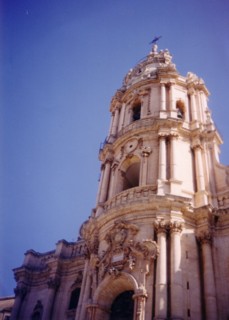
Duomo di San Giorgio, Modica


We can, of course, never know how things would have turned out on "the road not taken" and perhaps it is better thus so I would like to end this post by telling you about a happy moment that I would change only by prolonging it:


Christmas Steps (Rosalind Mitchell) / CC BY-SA 2.0


I do not know how old I was but probably not more than two or three.  I was standing with my mother at the top of Christmas Steps in Bristol, UK and we were waiting for my father.  

Christmas Steps:  such a wonderful, Dickensian-sounding name for a little street full of secondhand bookshops, as it was then, and in my mind, it snowed every time we went there.

And suddenly there was my father, walking up the steps towards us and beaming at me, holding his arms out.  I loved him so much at that moment and as his arms and warmth envelopped me I felt so safe.

If I could turn back the clock, I would make that moment last forever - as, indeed, it has, in my heart.


"I shall be telling this with a sigh
Somewhere ages and ages hence:
The roads diverged in a wood, and I -
I took the one less traveled by
And that has made all the difference."

- Robert Frost:  The Road Not Taken 


Below is the full list of bloggers participating in this week's theme:

Tuesday, October 25, 2011

WHAT IS HOME? - A "LET'S BLOG OFF" POST


Every two weeks, the blogosphere comes alive with something called a Blog Off. A Blog Off is an event where bloggers of every stripe weigh in on the same topic on the same day. The topic for this round of the Blog Off is "What is Home?"

On 27th May, 2005 I sat on the bare floor of my house in Cardiff, Wales, UK and I cried.  My possessions were on their way to Sicily, my precious dog was in boarding kennels at Gatwick Airport, London and I was remembering the last time I had seen the house empty, 21 years before.  


I had not always been happy in that house - indeed, it held as many sad memories as pleasant ones for me - but it had been my refuge from the world for a long time and now, with only the echo of my own footsteps and sobs where once there had been friends' laughter, the sound of dogs barking and my mother's beloved voice, I felt as if my heart would break. 

Yet it had been my choice to go and I was about to do something I had been dreaming of for 36 years, for I was moving to Italy.  So what was it that made that little house so hard to leave for the last time?  What was it that had made me call it "home"?

What I realised with a shock on that day was that, for a while, I would no longer have a home and that revelation made me feel strangely lost in the world.  Home, then, was not just the place I came back to at the end of the day or the trip, but it somehow fixed me somewhere on this vast earth.  I opened and locked my own doors, I received utility bills, I "belonged" to a street, a community, a town.  Now, by a stroke of a pen, all that was gone and I had no "space" of my own.

In Watching the English the anthroplogist Kate Fox writes that the British "sport" of hating estate agents [realtors] stems from our obsession with the carefully demarcated little spaces in which we live:  to sell our home is to invite an intrusion into that space - in other words, an invasion of our haven, the place where we can look and do as we like - and to agree to have judgement passed upon it.  And I had hated the estate agents' visits, the uncaring marches of others across my "little plot of land" so much that I had nearly given up the whole project.  So we  can be fiercely protective of our "home", even when preparing to leave it.


My garden in Cardiff had long become too much for me and even before I reached that point, I liked to look at it but had never wanted to do the work involved in keeping it even marginally tidy!  But I had shed tears for my garden ornaments, too.  They had been part of my life and I had "talked" to my stone animals and people every day.  Some of them were given to good, new "homes" but others have made a happy transition to my balcony in Sicily and I greeted them again as I unpacked them here:


When Simi the dog and I first arrived in Sicily we lived, for a while, in a tiny, traditional house belonging to a kind friend. It was comfortable and cool for us during the first months of that summer of 2005 and, with its magnificent Sicilian locks, we felt safe there:


But it wasn't "home".  No mail came addressed to me there and, although my neighbours were pleasant enough, they knew that we weren't going to stay so we did not become part of their community.   The house didn't contain our things but, more importantly, it didn't contain our memories.  We lived there but we didn't "live our lives" there, as we did in Cardiff and as we do now in our flat.   Home is a place for making memories. 

Simi and me at home in Sicily


Here is a list of other blogs which are participating in this week's "Blog Off" theme:

Counters


View My Stats