Showing posts with label Dad. Show all posts

Sunday, December 15, 2019

A LETTER TO BRITAIN


Modica, Italy
13th December 2019

Dearest Britain,


A park in Norwich, Norfolk

I don't live in you now and, though I left you 15 years ago for another country that had captured my heart, that doesn't mean I no longer love you, for it was you that bore me, nurtured me, educated and made me and there will always be a British girl inside the continental me. I write now because what happened to you yesterday was shocking, devastating, frightening and deeply upsetting; its consequences cannot be foreseen at this juncture, but 24 hours on they seem bleak. I may still love you – I always will – but I no longer recognise you.

The country I left was far from perfect and our imperialist past was not something that most of us boasted about. Of course there was racism, as there is everywhere and I witnessed it myself, but it also seemed to me that it was generally understood that democracy means that you cannot impinge upon the freedom of others. When exactly did that change? When did people begin to believe that they could make whatever anti-foreigner, anti-gay, anti-woman, anti-elderly, anti-you-name-it comment they liked with impunity – in one of the most diverse and tolerant countries in the world? I am too far away to know and I doubt you know yourself but it has happened. Tolerance, it seems, has gone and soon it could be followed off our little group of islands by accountability in the “Mother of Parliaments”, the independence of the judiciary and perhaps even the constitutional monarchy.

When you see your own country from afar, you are unable to balance your pessimism regarding events there with a healthy dose of observation of your countrymen and women just getting on with their normal lives, but I would guess that what happened is simply that democracy is fragile and, having enjoyed it for so long, we took our eye off the ball. Then the 2008 recession gave the charlatans the opportunity they had been waiting for to exploit discontent. And you fell for it, my country. Not having known an occupation within living memory, you failed to see the danger when it came and you are failing to understand it now. This tide will turn, of course, whether peacefully or not I cannot say, and I certainly would not hazard a guess as to how long it will take.

So let us think back for a moment to a generation, that of my parents, who did recognise a serious threat to their freedom, for what I really want to talk about tonight are memories. Whenever I fly back to you, Britain, as the plane comes in over the Channel and Kent, I think first of Folkestone, a town of which I have no memory but to which I was sent at the age of eight weeks – to an orphanage there, because my natural mother couldn't afford to keep me. (Do you really want to go back to that, Britain? A narrow, judgemental state in which single mothers are forced to give up their children? It seems that you do, judging from remarks made by the now re-elected Prime Minister.) Seven months later, in the cold November of 1950, two kind, loving people who longed for a baby – a Bristol newsagent and his wife, both of Welsh origin – visited that orphanage in Folkestone and they drove back to Bristol with an extra passenger - me. My bond with the man who had just become my father was instant and I miss him to this day. I was told that I also went willingly into my mother's arms but took longer about it!

As the plane nears London, I look down and try to get my geographical bearings of that enormous city and its outskirts and I remember that somewhere down there I went to school, accompanied my big-hearted, generous but flawed dad to both casinos and Gamblers Anonymous meetings (somewhere near Buckingham Palace), became part-Londoner and grew up. Also down there his ashes mingled with my mum's, in the Ruislip Garden of Remembrance named after the only English Pope, Nicholas Breakspear. I only went back there once after their respective funerals (twenty years apart), on the 25th anniversary of my dad's death and I learnt that they were not there, for they are where I am. If I hadn't known that, I would have been unable to leave.


Westminster Abbey

They sat in their North London Garden, the girl and her dad, and he spoke to her sometimes in Latin, sometimes in French and he bequeathed to her his love and knowledge of books. Without him, she would not have become a linguist. He also bequeathed to her his humour, his quintessentially British irony and his gift for repartee. They served her well as a teacher and they serve her well now, when humour is all there is, she thinks, to help her deal with the situation.

Chronic illness had prevented dad from fighting (much to his frustration), so back in Bridgend, Wales, he had worked in the Arsenal, then in Bristol hosted American soldiers and joined the Home Guard. He and mum had been horrified by fascism and, like many of his era, he had, before what was always referred to as “The War”, been a member of the Communist Party because it was thought to be the only way to stop Hitler. Later, disillusioned, he left it and received threats for doing so. During the war and during our Bristol years he worshipped Churchill. That was a different kind of Conservatism, though – a party of the rich for the rich, yes, but there was a sense of decency and of responsibility for the fate of their fellow-Britons. In London during the Heath premiership, dad switched his allegiance to the Labour Party because, he said, they cared for the ordinary worker.


Dad (second from left) in the Bridgend Arsenal

My journey from the airport usually continues by coach and down we go, towards the South-West. I still have a sense of childish excitement when I see the motorway signs to “The South-West and Wales”. It's best before evening, when you can still see the green on either side, and as we near Bristol I muse that in some of these fields, cut through by the very road I am travelling on, the little girl and her dad used to go mushroom-hunting. Then she became a teenager and suddenly she was hurtling along the nearby country lanes in her boyfriend's car. She wept and wept when they left for London in the spring of 1965.

And now we come to the Bridge - the span across the River Severn which takes you into Wales. And Wales it is which gives me my real British identity. I grew up among its gentle accents, heard and sang its music every day, assimilated its culture and regarded it always as “home”. As you cross the Bridge you can still see the loading point for the old Aust ferry, which (if you were lucky) took you across before the miracle of the First Severn Bridge. (If you are unfamiliar with that part of Britain, you may be interested to know that the Severn has the third highest tidal range in the world. Hence the two bridges across it that now exist are true feats of engineering.) Sometimes you queued for hours, only to be told that they could take no more cars across that evening, either because of the current or because of the time, and then you had to get into Wales by driving “all around bloody Gloucestershire” as dad would bad-temperedly put it. Once in Wales, we were home and we stayed with my uncle and aunt or in the Cardiff Central Hotel owned by dad's cousin Frank. Years later, as a university student, I spent many drunken nights in its bar – Frank, the hotel guests and its staff had long gone – and later still it was all destroyed by fire. Wales was, and is, the sound of kindly, sing-songy voices, the land of the cwtch (cuddle - and believe me, there's nothing like a Welsh one), the aroma of Welshcakes cooking on a bakestone, a carpet of daffodils in March and April and the land of childhood warmth.


In Wales you'll find daffodils even when there aren't any!
Here, daffodil ornaments are on sale
 at Cardiff Christmas Market

But now I make another journey on these rare trips home: from Cardiff to Norwich, or sometimes straight from London to Norwich, another town of which I have no childhood memory, and yet it is where it all began. For that is where I was born and spent such a short time with my natural mother, who already had a three-year-old daughter called Jill, my sister. How we met after 64 years is a story I have told elsewhere but it is in Norwich that my British life comes full circle and yes, I do have a strange sense there, too, of coming home, of having been there before. Sadly I can only visit my natural mother at her graveside and I take her Welsh daffodils or, at this time of year, a little Christmas tree, and I hope she knows that Jill and I are there together. I have come to love Norwich in its own right, too – its lanes, the glory of its Cathedral, which I have found to be welcoming, and the peace of the nearby Broads.


A peaceful morning in Norwich


A Christmas tree for my natural mother
And on the way there I cross London again and remember other times, fashions and events, both in its life as a city and in my own.

To borrow from Rupert Brooke, all these things I have loved in you, Britain and, even though I do not recognise you now in your national life, they endure, for no politician can take my memories, though age may do so. Therefore I set them down now, for I want you to know that I have loved you, and I hope that you will come through this dark period as you have come through others – stronger, more determined to preserve what is good and, hopefully, kinder – and that if I do not live to see it, others will.

Tuesday, April 12, 2016

SICILY SCENE REVISITED - THE FIRST POST

In a few days' time, this blog will be ten years old,  Between now and the "blog birthday", and with your indulgence, I am going to repost some of the articles that have been popular, have given me great pleasure to write or that have otherwise been significant for readers and for me.

Here, then, is the first short post that kicked off the whole thing. I confess I didn't quite know what I was doing!

Tangerine Land - 21st April 2006

When I was a little girl, in Bristol, England, in the 1950s, you could only get tangerines at Christmas. They were about the most exotic food you could buy and we didn't differentiate between tangerines, mandarins, satsumas or clementines. Any round, orange, citrus fruit that was too small to be an orange was a tangerine!I can still see my father's delighted face as he came home on winter nights and produced a tangerine from each of the pockets of his long, dark blue overcoat. I thought the smell of the tangerine was heavenly and even now, it signifies Christmas for me. I didn't know where the fruit came from but I knew I wanted to go there!

Coincidentally I am writing this almost 33 years to the day since my father's death. How happy he would be to know that I have come to live in the land of the tangerine!

Saturday, September 12, 2015

SABATO MUSICALE

Hearing tenor Jonas Kaufman sing You Are My Heart's Delight in The Last Night of the Proms earlier, I was reminded that it was one of my dad's favourite songs and he often used to sing it to my mum. I have posted the song in Italian on this blog before but not this 1968 Gianni Morandi version, which I love:

Gianni Morandi - Tu che m'hai preso il cuor

Saturday, February 28, 2015

SABATO MUSICALE FOR ST DAVID'S DAY

Tomorrow is St David's Day and I am posting my Dad's favourite Welsh song.  This year, as I listen to it, I am also, of course, thinking of my little Simi. This does not detract at all from my love for Bertie-Pierrine and I know I am very lucky to be spending St David's Day with her. 

HAPPY ST DAVID'S DAY, EVERYONE!

Bryn Terfel - Ar Hyd y Nos

Monday, August 04, 2014

A CANDLE IN SICILY

Father and son - Richard and Arthur Eggleton


In one hour from now, the lights will go out all over my own country to commemorate the moment, one hundred years ago, when Britain entered the First World War. The ""Lights Out"  initiative is also intended as a mark of respect for those who were killed or maimed in that terrible conflict. Households are asked to leave just a single candle burning for one hour and that is what I am going to do here in Sicily, although Italy entered the war the following year.

During that hour, like people all over Europe and beyond, I will reflect upon those killing fields, some so near Britain that the guns could be heard there and yet so far away in terms of their unimaginable conditions and brutality. And my mind will also turn to a Welsh naval officer who never saw his son. The officer was blinded in the Battle of Jutland in 1916 and his son was my father, born three years later. 

Chief Petty Officer Richard Eggleton could not have known, during the long months of coming to terms with the loss of his sight, that there was still happiness in store for him, but one day, while he was in rehabilitation at St Dunstan's [now Blind Veterans UK ], a friend of his brought another friend along to visit. This was my future grandmother, Mary. Richard and Mary were not young when they married, so when Mary stopped menstruating and began to put on weight, she assumed it was the menopause. When my dad decided to pop into the world one summer afternoon it was a complete surprise to her.

War, as we all know, hurts the innocent and it hurt my dad in indirect ways: Mary had developed a severe hearing impairment and my dad was a bit rebellious so, with his best interests at heart, Mary and Richard sent him to a boarding school which had iron discipline and [unknown to them] a very cruel régime. My dad never forgot it. This may seem nothing if we compare his suffering to that of the frightened children of a faraway war taking place at this very moment, but I can remember my dad shivering every time we passed his former school when I was a little girl.

The starving German children of 1918 grew up to want revenge and got it and I wonder whether those waging war so mercilessly now ever stop to think about what could one day be unleashed upon their children and their children's children.

No one despises war more than someone who has fought in one and Richard Eggleton, while of course respecting the memory of all who had fought with him, wanted his son to grow up in a world at peace. 

As I sit by the light of a single candle in Sicily tonight, I silently thank a grandfather I never knew for choosing to go on living, despite the moments of deepest despair that he must have gone through, and for the little boy who became my dad.


Wednesday, April 23, 2014

WILL DAY

The subject of this post is not the second in line to the British throne but a much older Will, the bard of Stratford-upon-Avon, whose 450th birthday - or the generally accepted date of it - is being celebrated today.

Yesterday evening a friend who also comes from Stratford-upon-Avon gave a little party in the poet's honour, and tiramisù alle fragole, made to Matthew Fort's recipe which I've mentioned before, was my attempt at a themed dish:


As I tend to do everything arse-backwards, I'd decided on the quote I wanted to use first, and then tried to think of a dish. The quote, in case you cannot see it clearly, is,

"The strawberry grows underneath the nettle"
- Henry V

The "leaves" at the top were my best effort at making pasta di zucchero nettles and, by the time I came to the second one, I decided to leave out the fancy work on the edges. Most of the strawberries, of course, were underneath the mascarpone!

At the party the place settings were decorated with rosemary "for remembrance":


These were just some of the lovely treats:  Ah, sausage rolls!


 Another friend had brought hot cross buns all the way from the UK!


As you see, there was quite a mix of traditions


and in Sicily, in spring, there had to be ice cream!


My friend also provided what, as a teacher, I would call some "realia":


Then there were some readings from Shakespeare's works. [I read Sonnet XXIX, for  my Dad, who died 41 years ago this Easter.] Three friends made rather fabulous witches, I must say!  Finally, I lowered the tone by reading a little ditty I had composed: 

Will Day


Will Shakespeare, yours was quite a muse
from errors down in Syracuse
to propaganda for Queen Bess –
- your plays were thirty-eight, no less.
Poor Hamlet – what a tortured bloke,
for him existence was no joke.
He could have saved some brouhaha
if he’d just said, “Siamo qua.”
But let us find a cheerful fellow,
Macbeth won’t do, nor will Othello.
Bottom, Touchstone, Mistress Quickly
meddled in the plot quite thickly.
Down the ages comes their laughter,
hope it reaches the hereafter.
If it’s true what some folk say,
you never loved Anne Hathaway,
the sonnet lady was a lad,
we don’t care ‘cos your rhymes weren’t bad.
They claim that Bacon wrote the plays –
- one must admit, he turned a phrase,
but not like you, dear Stratford bard,
held for centuries in regard.
We celebrate your birth this eve
and some among us really believe
that though the thing is still the play,
you were Sicilian, anyway.

© Pat Eggleton, 2014

Notes

"Siamo qua" = "We are here" - a common Sicilian saying. It took me some time to realise that it is not an acceptance of physical location, but a reference to the fact that we are still alive and should be grateful!

The idea that Shakespeare was Sicilian is taken quite seriously here and books have been written about it.


Wednesday, April 17, 2013

LETTER TO A FATHER

My Dad as a young man, with the ladies.


My dearest Dad,

As the fortieth anniversary of the day I lost you draws to a close, I can hardly believe that I have got through all these years without you, that I am already ten years older than you were when you died, or that I have been unable to discuss with you so many events, both personal and of worldwide importance:  you knew nothing of the political excesses of the woman whose funeral took place in our country earlier today and, whilst you would have admired her resolve, you would have been horrified at her rigidity and hardness. The fall of the Berlin Wall; the Mandela release; the life and death of Diana, Princess of Wales; the death of the Queen Mother, for whom, though you were no royalist, you felt the affection of your generation of Brits; climate change, the euro, New Labour;  9/11, 7/7, the Arab Spring....  all these you have missed and I have held imagined conversations with you about every one of them.

You'd have pronounced the mobile phone a miracle, marvelled equally at the internet and "played" with the latter as you probably did with your train set as a boy. Post-it notes would have irritated you, the Rubik's Cube perplexed you and downloadable music delighted you. I'm  not sure what you would have made of e-books as I'm not certain what I think of them myself but I suspect that you, like me, would have held on to your library and been glad that you belonged to a generation that grew up with "real" books.

It was you, of course, who taught me to revere books, along with music, art and languages. You imparted to me your passion for Wales, the West Country and London;  you introduced me to Vichyssoise, Chop Suey and Welsh salted butter; you taught me to love dogs, yellowhammers and sparrows.  "Ah, he thinks it's there for him to dig", you would say as our various dogs, rather successfully, attempted to dig up our garden.  "If they were rare, people would travel miles to see them", you would say of the sparrows.

You could be impetuous, maddening, quick-tempered and outrageous but you were never unkind. Like me, you had probably absented yourself from the queue when patience was being handed out but I may just be getting better at this after eight years in Sicily!  

Italy is a country you never visited and sometimes I imagine what would have happened had you lived and been able to come with me. You adored sunshine and, though you were as fair-skinned as I am, the sun never dared to burn you. I like to think that you, too, would have enjoyed some "seasons in the sun" and appreciated the good aspects of what is still a wonderful country. And here we come to that other dimension of grieving, for it is not only when great events happen that I miss you. I miss you on beautiful days and on rainy ones, through all my "triumphs and disasters" and in so many daily, seemingly insignificant, moments of my life. Right now, I'm going through one of the most difficult periods I have ever experienced and I miss your sheer physical presence and the warmth of your hug - your hug that always made me feel safe.

Yet, as I write, I become aware that you gave me the mental tools to survive even this and that you also taught me forgiveness, tolerance and compassion.

My dear kind, imperfect, wonderful Dad, thank you for it all - especially the love.

For thy sweet love remember'd such wealth brings
That then I scorn to change my state with kings.

- Shakespeare
   Sonnet XX1X


Tuesday, March 19, 2013

SAN GIUSEPPE'S WINDOW

As San Giuseppe's and Father's Day in Italy draws to a close, I think of my own lovely Dad and how he would have loved this portrait of the saint. I've posted the picture before but some of you may not have seen it. The window is in Modica Bassa and the grille across it is only open for a few days around the Feast of San Giuseppe.

San Giuseppe is believed to have saved Sicily from famine and in some towns altars of bread are created in his honour. San Giuseppe is the protector of artisans, carpenters, cabinet-makers, bursars, workmen, lawyers and, of course, fathers everywhere.

Tuesday, January 31, 2012

MY GRANDMOTHER ALWAYS SAID... A "LET'S BLOG OFF" POST


Every two weeks, the blogosphere comes alive with something called a Blog Off. A Blog Off is an event where bloggers of every stripe weigh in on the same topic on the same day. The topic for this round of the Blog Off is "My grandmother always said...."


I never actually met either of my grandmothers but I do remember "helping" my grandad to wash the dishes and his saying, "Lady to the house" if I dropped a spoon and "Gentleman to the house" if I dropped a fork.  I lived in hourly expectation of these visits and, as my parents ran a newsagent's and sweet shop in Bristol, UK, people were always dropping in anyway so I was able to nod sagely upon their arrival and puzzle them with the information that "Grandad told me so."

My mother, like many of her generation, instilled in her daughter the necessity of always wearing clean underwear "in case you get run over" and, having grown up in an era when some of her classmates did not have shoes, used to angrily declare that there was "no such thing as the good old days" whenever her contemporaries became sentimental about those times.


My mother - front row on the right - at school in Pencoed, South Wales, UK

From my great aunt Mabel I learned that "This, too, will pass" and that there were few troubles that could not be assuaged by getting your nose into a good book.

My father also taught me to love books and that, as Helen Keller said, "The highest result of education is tolerance."  He deemed it important to have what is termed in one of our favourite films, The Philadelphia Story, "some regard for human frailty".  "There but for the grace of God go I", he would say of the misfortunes of others, much more often than he would utter the words, "Serve him right."

Bing Crosby and Grace Kelly in High Society

[I couldn't find the scene where Dexter talks about "regard for human frailty" in The Philadelphia Story so here is the next best thing!]


Dad believed that people should be themselves and he had no time for pretension. If the neighbours disapproved of him, he declared, "They could all move out."  This may be why his daughter, today, can say that those whom she calls the "Sicilian dust police" - women who judge another woman according to her housewifely skills - need not come to her house if it is not to their liking.  Her Sicilian friends find it hard to believe that she really does not care but it is true.

Then there was the uncle who told me that if I ate too many bananas I'd get to look like a banana;  this made me cautious about eating these fruits for years. 

What wisdom will I pass on?  Even though I'll be 62 in a couple of weeks, I'm not sure I've acquired any but I am learning some "new old wisdom" from Sicilian proverbs.  Here are three of my favourites:

"Pi fari beni l'amuri ci voli 'a forza rê picciuotti e 'u pitittu rê viecci" - "To make love you need the strength of the young and the desire of the old."

" 'U Signuri runa 'i viscotta a cu' nun avi rienti" - "God gives biscuits to those with no teeth."

And one for our times.  I wish I'd learned it long ago! 

" 'Cu accatta cosi 'nùtili, prestu vinni 'u bisugnèvuli" - "He who buys useless things will soon have to sell the things he needs."

I think I'll leave you with the advice I offered my female readers on the occasion of my sixtieth birthday, as I am still convinced that it could save generations of women to come from a lifetime of misery:

"Only weigh when you're thin!"

Below is the full list of blogs participating in this theme:

Tuesday, January 17, 2012

IF I COULD TURN BACK TIME - A "LET'S BLOG OFF" POST


Every two weeks, the blogosphere comes alive with something called a Blog Off. A Blog Off is an event where bloggers of every stripe weigh in on the same topic on the same day. The topic for this round of the Blog Off is "If you could turn back time...".


We've all done it, haven't we?  At certain moments, we've all thought, about trivial events or life-changing ones, "If only I had...", "If only I hadn't..." or "If only I had said / could say...".  Here are some of the the things I might change if I could turn back time:


I wish I could have come of age in an era when women wore hats - it would have spared me so many stressful moments on bad hair days


and I often wish I'd become a housewife and a mother instead of a career woman:


The garden shed my grandad made into a "little house"
for me to play in


I'd like to be able to say that if I could turn back time I wouldn't have broken a flowerpot over my friend "Wrecker's" head when I was four - she got the nickname because she broke all my toys - but I'd be lying, even 58 years later.


"Wrecker" sitting on my car [which she didn't break!]


Being blessed with curves was not an advantage in the late 1960s so I'd change the fashions of the Mary Quant era.


And I wish I'd spent more time studying and less living it up at university, but to have done so would have been to have denied being young.


If I could turn back time I would have spoken out more often about some situations and kept a wise silence about others. The advice in this early twentieth century postcard is not a bad maxim:


"I have often regretted my speech, never my silence."


I also wish that I had learned to live within my means long ago and had not, in Mr Micawber's words, "blighted the blossom".


If I could turn back time, I would have come to live in  lovely, Baroque Sicily sooner but we tend to forget how "life" can get in the way of our plans and dreams.


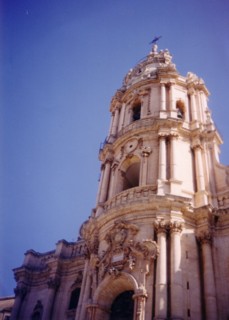
Duomo di San Giorgio, Modica


We can, of course, never know how things would have turned out on "the road not taken" and perhaps it is better thus so I would like to end this post by telling you about a happy moment that I would change only by prolonging it:


Christmas Steps (Rosalind Mitchell) / CC BY-SA 2.0


I do not know how old I was but probably not more than two or three.  I was standing with my mother at the top of Christmas Steps in Bristol, UK and we were waiting for my father.  

Christmas Steps:  such a wonderful, Dickensian-sounding name for a little street full of secondhand bookshops, as it was then, and in my mind, it snowed every time we went there.

And suddenly there was my father, walking up the steps towards us and beaming at me, holding his arms out.  I loved him so much at that moment and as his arms and warmth envelopped me I felt so safe.

If I could turn back the clock, I would make that moment last forever - as, indeed, it has, in my heart.


"I shall be telling this with a sigh
Somewhere ages and ages hence:
The roads diverged in a wood, and I -
I took the one less traveled by
And that has made all the difference."

- Robert Frost:  The Road Not Taken 


Below is the full list of bloggers participating in this week's theme:

Saturday, April 16, 2011

SABATO MUSICALE

For my Dad, who died 38 years ago this weekend - because he loved this song and I loved him:

Mario Lanza - The Loveliest Night of the Year

Saturday, April 17, 2010

Friday, July 31, 2009

POSITIVE DAY - POST 1


Positive Day is the inspiration of a 12-year old girl and you can read all about the idea here. I am delighted to be taking part.

Like everyone else, I've had my troubles, particularly during this past year, so today presents me with a great opportunity to list all the things I am grateful for in this life:

I am grateful to have had a biological mother who gave me a chance.

I am grateful to have been brought up by 4 people who not only taught me how to love, but also how to show love: my Mum, Dad, Great Aunt Mabel and my Grandpa.


I am grateful for wonderful friends in Italy, in Britain and all over the world through blogging and social networking sites.

I am grateful for Rosa, my "cleaning lady" who has become my secretary, my confidante and my close friend. If there is a God, I truly believe He sent me Rosa, for she has made such a difference to my life. She is pictured here with her husband, who also helps me a lot.


I am grateful for books and for being a linguist.


I am grateful that I live in a beautiful part of the wonderful country I fell in love with at 19.


And I am thankful for every moment I spend with my precious Simi.


Friday, April 17, 2009

FOR DAD

This is for my much-flawed but lovely, flamboyant, generous and above all, kind Dad, who died 36 years ago today. There has not, in all that time, been a day when I have not thought of him and missed him.

Here he is charming the ladies


and on his wedding day:


And here's a song he loved. It was popular not long before he died:

Nat King Cole - This Is All I Ask

Thursday, April 17, 2008

ONE FOR MY DAD

My lovely Dad died 35 years ago today and sometimes it seems like yesterday, reader. Here is a song he loved, sung by an artiste for whom he felt compassion.

I forget where I read that it is often the peripheral detail of the traumatic events of our lives that remains with us, but I remember that, just prior to that terrible week of 1973, I had been reading a biography of George Sand. And I have never been able to read anything by or about her since. What a coincidence, then, that this melody is, of course, the Fantaisie Impromptu in C -sharp minor by Chopin, that lady's lover for many years.

This post is also dedicated to rainbow-chasers everywhere.

Judy Garland - I'M ALWAYS CHASING RAINBOWS

Friday, December 14, 2007

COUSINFESTS


My cousin left on the 1 pm Catania coach today and I was so sad as we waved goodbye. I am a sentimental soul really and hate goodbyes of any sort as I have had too many of them in my life . Cousin and I have never been close but he was kind to me when I was a student, even paying for my first trip to Paris and he is one of only three people in the world with whom I can reminisce about my Dad [the other two being an elderly second cousin in Swansea and a first cousin in New Zealand]. While he was here there was something so comfortingly familiar about some of his gestures and mannerisms, reminding me a little of my Dad but mostly of my Great Aunt Mabel who lived with us and was a big part of all our lives, with the result that I couldn't quite work out how I felt - and still can't. Simi took to him immediately and I realised how much of my Dad there is in cousin when he greeted and petted her just as Dad would have done. Cousin is 17 years older than me and, as I hadn't seen him since 1992, I wondered, as I left him at that bus stop, if we shall ever see each other again.


Enough melancholy! During cousin's visit I managed to get him into the seasonal griddled panettone with cotognata for breakfast habit - he didn't take much corrupting - one which I think he will import into Oz, and "forced" him into having an aperitivo before 11 am yesterday morning. The manager of the Altro Posto couldn't have made more of a fuss of us and I was just wondering why they were being so slow in serving the g & ts when I saw them place a tray of antipasti on the counter hotplate: they'd been waiting for these complimentary "bites" to be ready. Just as we were about to leave they said, "Oh, no, you can't, for our mini- pizze have just come out of the oven" and so we were "persuaded" to try some of these, too.


Of course, I had to introduce cousin to the most important [Sicilian] man in my life, Raffaele the hairdresser and we were made a great fuss of there, too. We had to have coffee, and, busy though the salon was, Raff found time to admire cousin's family photos and cousin his. Thus are bonds between nations formed. Linda was in Raffaele's so we were invited to afternoon tea with her and Gino - a bit of a rushed one as I had to be in work for 6pm - and we feasted upon Linda's almond biscuits, more cotognata and Gino's freshly picked mandarin oranges.


Above you can see some images of the feast we had at Marco and Giovanna's on Wednesday: pork in aspic [meats in aspic are very popular as antipasti here and can be bought], a tray of focacce, Giovanna's fruit salad, a tray of bought dolci I took along as I had no time to make a dessert and Giovanna's cobaita [a very hard version of torrone made at Xmas and containing sesame seeds, which were introduced into Sicily by the Arabs]. Yesterday at lunchtime I fed cousin my pineapple and rocket salad, chicken bocconcini [without the blanched chive "ribbons" with which I usually adorn them as no chives were available, which was probably just as well considering that the things take about 3 hours to assemble when I use these!] two kinds of olives and my "Prague casserole" with herb-roasted potatoes. I'd offered to take cousin out to lunch but he prefers home cooking and this lot is what he got! - Fruit and liqueurs for dessert.


A plea and a promise: Please, please, does anyone out there know how to fix the blog header? Normal blog visiting will resume tomorrow.

Monday, November 26, 2007

WAR, RESPECT AND REMEMBRANCE


The words on the postcard are: "Je vois, bien souvent, ma maman pleurer. Je sèche ses pleurs avec un baiser - I often see my mother crying and I dry her tears with a kiss."
The certificate in the second photo hangs in my sitting room: it is the honourable discharge certificate issued to my paternal grandfather, one of many signed by King George V and handed out to the maimed of World War 1. Blinded at the Battle of Jutland, my grandfather never saw his son, my father. A career naval officer, he had travelled far and wide; I remember , as a child, our house being filled with silks and artefacts he had brought from China, until they just wore away or got broken over time. I like to think that he visited Sicily and felt the sun on his face before the darkness engulfed him. Before moving here, I considered giving the certificate to the Maritime Museum in Swansea – they had expressed some interest in having it – but I just couldn’t let it go.

I thought about telling this story on November 11th but did not, [a] because there is no commemoration here on that day and [b] because although I of course respect and feel deeply for my fallen or wounded countrymen in any war, I have issues with the current war and so felt it best to remain silent. I am not, I would like to point out, a pacifist; I should be but I am not. I will now break that silence in view of what happened at the weekend:

Many of my fellow-Blogpowerers were incensed at this and I understand their anger. Daily Referendum, James, Cllr Tony Sharp and Lord Nazh all posted on it immediately [I apologise if I have left anyone out] and I agree with much of what they have to say. James said, “I would dearly love to see some sort of post, some sort of comment from the womenfolk to assure me we haven’t gone stark, raving mad.” I commented on his site; now here is the post, though I’m not sure you are going to like it, James.

According to the report, a woman, or two women, behaved abusively towards badly injured servicemen using an area of her/their local swimming pool as part of their rehabilitation. That is, of course, appalling and I am not in any way excusing the women. Indeed, I hope that, had I been there, I would have had the courage to challenge them. But I would not have asked them “What have you ever done for your country?” Instead, I would have tried to find out what exactly their reasons were and would have tried to remonstrate with them. I am not for a moment suggesting that I would have done this totally calmly as I would have been angry, too. I would probably have got myself beaten up or worse, in today’s Britain. Much has been written about the fact that it was women who behaved in this way: yet I can imagine, because I have witnessed similar behaviour, that it could have come from young men, too. The most likely reason for their behaviour is, I believe, sheer ignorance. I would be willing to bet that they would have made similar remarks to any group of disabled people, and I would have been just as incensed: I hope my fellow-Blogpowerers would have been, too.

I have read that in the USA, the women would have been immediately taken to task in no uncertain terms and there are three possible reasons why this apparently did not happen in Britain: [1] maybe there just weren’t many people about [2] those who were about feared for their jobs or violent consequences [both of which suggest sad truths about our society] and [3] we just do not have the unquestioning patriotism of Americans. We do not put our hands on our hearts the minute the chords of our National Anthem strike up and I, for one, will stand for Mae Hen Wlad Fy Nhadau but will not rise for God Save the Queen [ or at least, there are very few occasions when I would]. I think this questioning society is, on the whole, a good development and one of the quotes I liked to leave my A level students with was this, from Winifred Holtby’s South Riding:
“Question everything – even what I’m saying now. Especially, perhaps, what I say. Question everyone in authority, and see that you get sensible answers to your questions.”
I never read them the next part, because it would not have been appropriate, but I think it is worth quoting here:
“Vow as much love to your country as you like; serve to the death if that is necessary… But, I implore you, do not forget to question.”
Without questioning, there would have been no resistance at all to tyrants through the ages.

Let us not confuse questioning, however, with lack of deference, which is probably a good thing, and lack of respect, which is not. Yet I cannot agree with James that our troops deserve, at all times, unquestioning respect: for if that is so, I would be required to respect those who had done this. General Montgomery, I read, regarded rape as a mere by-product of war; how can I respect that or “teach” others to do so?

James also asks, in the comments, whether women could just say “Thank you to our brave men who fought to protect us" without bringing feminism into it: I’ll leave aside the feminist issue but would point out that women have always been both the victims and complicit in war: wives and mothers of sons waited in dread for the telegrams in both World Wars, just as they dread the appearance at the door of the officer in a suit today, whilst in WW1 some women were as fooled by the propaganda as their menfolk, and, in giving out white feathers to non-combatants and generally egging the men on, were as responsible as their government for encouraging the whole bloody mess. In both wars, there were unsung heroines and today women are also front line soldiers. So it is no longer possible to conjure up an image of the “little woman at home who couldn’t defend herself”.

When the shelling on the western front stopped on Xmas Eve, 1914, and both sides saw sense and played football instead of slaughtering each other, I suspect that the reaction of many women was, “If they can lay down arms for an hour or two, why can’t they stop the entire war?” and I don’t think this thought was far from the minds of many combatants either. Or, as John Lennon and others were later to put it, “What if they gave a war and nobody came?” If only!

I do not believe, you see, that going to war always makes your country – or, god forbid, someone else’s – a “safer place”. Wars have been and are being fought over language, territory, the colour of people’s skin, slavery, oil, an abstract noun and, most often, the ambitions of unscrupulous politicians who never get near the firing line. Remember the reactions of the politicians in Fahrenheit 9/11 when Michael Moore suggests they sign their own sons and daughters into the military? “No way!” their faces said.

Only very rarely is war really fought for “freedom” and when it is, it seems to me, those in power and their supporters do not seem very keen upon upholding the freedom to dissent, or to abhor war: I have been criticised in Britain, in November, our season of remembrance, for wearing a white peace poppy along with the red remembrance one. Yet I often think of the blind sailor who never saw his son and my way of respecting and remembering him and those like him is to campaign for peace.

Counters


View My Stats