Showing posts with label arandora star. Show all posts

Wednesday, July 02, 2025

ARANDORA STAR 85th ANNIVERSARY

I have posted about the Arandora Star tragedy many times over the years and I think it is worth doing so again today, not only in memory of those who perished and in solidarity with their families, but because this sad event is a timely reminder of what can happen when we "other" immigrant communities or make unfounded assumptions about them. This is an edited version of my 2021 post:

At the outbreak of World War II "enemy aliens" living in Britain were divided into three categories: those in class A were deemed to represent a high security risk and were interned; those in class B were "doubtful" and were subject to some restrictions; and those in class C were thought to pose no security risk at all. However, following the Fall of France in 1940 Churchill decided, in his own words, to "collar the lot" and the majority of class B aliens were interned. When Italy declared war on Britain and France on June 10th the internment of Italian males was ordered. Many of the Germans interned had opposed the Nazis or were German Jewish refugees. Most of the Italians interned had lived in Britain virtually all their lives and many had sons who were serving in the British military. Others were in Britain because they had opposed Mussolini and later fled their country in fear for their lives. The majority of the men were detained in internment camps on the Isle of Man or Orkney, where they were treated inhumanely.
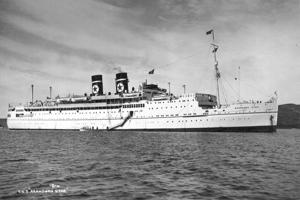
A policy of deporting internees was in place and on 1st July 1940 the SS Arandora Star, a converted cruise liner, sailed from Liverpool for Canada with 1,864 people on board. Of these 734 were Italian internees, 479 were German internees, 89 were German prisoners of war and the rest were guards and crew, 80% of the crew having been newly signed on that morning. The internees were forced to sail in appalling conditions, packed onto a ship built to carry only 250 passengers and extended, in wartime, to carry 200 more.
The ship was painted battleship grey, making her look like a troop carrier, and displayed no Red Cross flag, which would have distinguished her as a vessel carrying civilians. On her second day out from Liverpool the ship was torpedoed by a German submarine off the west coast of Ireland. There had been no lifeboat drills, the rafts were immovably strapped to the sides of the ship anyway, and few lifejackets had been issued. In addition, the decks and the lifeboats were separated by walls of barbed wire - a measure which the Captain had protested about before sailing. Most of the Italians did not stand a chance, as they had come from mountainous areas of Italy and had never learnt to swim. Those few who did survive the freezing sea were again harshly treated after being rescued and some were then deported to Australia.
When the British media reported the tragedy, the public were told that Nazis on board had dashed for the lifeboats knocking everyone else out of the way. No mention was made of the fact that respectable people who had made positive contributions to British society had been on board, along with refugees who had risked their lives, in their own countries, for the very freedoms the British now claimed to be fighting for.

No apology has ever been made by a British government.

This year (2025) the Foreign Affairs Committee of the Italian Camera dei Deputati (the Italian equivalent of the House of Commons) decided to dedicate a day every year for  the country to remember the victims of the Arandora Star tragedy. It will not, of course, be a holiday, but an opportunity for education and remembrance.

Friday, July 02, 2021

ARANDORA STAR 81

Today is the 81st anniversary of the Arandora Star tragedy and I again post part of an article I wrote about it in 2009. I do this in memory of the victims and in solidarity with their families but also because, sadly, the story is a much-needed reminder of what can happen when we designate immigrant communities as "the others". 

At the outbreak of World War 11 "enemy aliens" living in Britain were divided into three categories: those in class A were deemed to represent a high security risk and were interned; those in class B were "doubtful" and were subject to some restrictions; and those in class C were thought to pose no security risk at all. However, following the Fall of France in 1940 Churchill decided, in his own words, to "collar the lot" and the majority of class B aliens were interned. When Italy declared war on Britain and France on June 10th the internment of Italian males was ordered. Many of the Germans interned had opposed the Nazis or were German Jewish refugees. Most of the Italians interned had lived in Britain virtually all their lives and many had sons who were serving in the British military. Others were in Britain because they had opposed Mussolini and later fled their country in fear of their lives. The majority of the men were detained in internment camps on the Isle of Man or Orkney, where they were treated inhumanely.
A policy of deporting internees was in place and on 1st July 1940 the SS Arandora Star, a converted cruise liner, sailed from Liverpool for Canada with 1,864 people on board. Of these 734 were Italian internees, 479 were German internees, 89 were German prisoners of war and the rest were guards and crew, 80% of the crew having been newly signed on that morning. The internees were forced to sail in appalling conditions, packed onto a ship built to carry only 250 passengers and extended, in wartime, to carry 200 more.
The ship was painted battleship grey, making her look like a troop carrier, and displayed no Red Cross flag, which would have distinguished her as a vessel carrying civilians. On her second day out from Liverpool the ship was torpedoed by a German submarine off the west coast of Ireland. There had been no lifeboat drills, the rafts were immovably strapped to the sides of the ship anyway, and few lifejackets had been issued. In addition, the decks and the lifeboats were separated by walls of barbed wire - a measure which the Captain had protested about before sailing. Most of the Italians did not stand a chance , as they had come from mountainous areas of Italy and had never learnt to swim. Those few who did survive the freezing sea were again harshly treated after being rescued and some were then deported to Australia.
When the British media reported the tragedy, the public were told that Nazis on board had dashed for the lifeboats knocking everyone else out of the way. No mention was made of the fact that respectable people who had made positive contributions to British society had been on board, along with refugees who had risked their lives, in their own countries, for the very freedoms the British now claimed to be fighting for.

No apology has ever been made by a British government.

Thursday, July 02, 2015

ARANDORA STAR 75

Today is the 75th anniversary of the Arandora Star tragedy, one of the most shameful episodes in British wartime history and about which I first wrote on this blog in 2009. Since then, due to the tireless work of campaigners, memorials have been unveiled in Cardiff and Glasgow and public awareness has been raised but no British government has ever apologised.

Today, in memory of those who died and their loved ones , I am re-posting this:


At the outbreak of World War II "enemy aliens" living in Britain were divided into three categories: those in class A were deemed to represent a high security risk and were interned; those in class B were "doubtful" and were subject to some restrictions; and those in class C were thought to pose no security risk at all. However, following the Fall of France in 1940 Churchill decided, in his own words, to "collar the lot" and the majority of class B aliens were interned. When Italy declared war on Britain and France on June 10th the internment of Italian males was ordered. Many of the Germans interned had opposed the Nazis or were German Jewish refugees. Most of the Italians interned had lived in Britain virtually all their lives and many had sons who were serving in the British military. Others were in Britain because they had opposed Mussolini and later fled their country in fear of their lives. The majority of the men were detained in internment camps on the Isle of Man or Orkney, where they were treated inhumanely.
A policy of deporting internees was in place and on 1st July 1940 the SS Arandora Star, a converted cruise liner, sailed from Liverpool for Canada with 1,864 people on board. Of these 734 were Italian internees, 479 were German internees, 89 were German prisoners of war and the rest were guards and crew, 80% of the crew having been newly signed on that morning. The internees were forced to sail in appalling conditions, packed onto a ship built to carry only 250 passengers and extended, in wartime, to carry 200 more.

The ship was painted battleship grey, making her look like a troop carrier, and displayed no Red Cross flag, which would have distinguished her as a vessel carrying civilians. On her second day out from Liverpool the ship was torpedoed by a German submarine off the west coast of Ireland. There had been no lifeboat drills, the rafts were immovably strapped to the sides of the ship anyway, and few lifejackets had been issued. In addition, the decks and the lifeboats were separated by walls of barbed wire - a measure which the Captain had protested about before sailing. Most of the Italians did not stand a chance , as they had come from mountainous areas of Italy and had never learnt to swim. Those few who did survive the freezing sea were again harshly treated after being rescued and some were then deported to Australia.
When the British media reported the tragedy, the public were told that Nazis on board had dashed for the lifeboats knocking everyone else out of the way. No mention was made of the fact that respectable people who had made positive contributions to British society had been on board, along with refugees who had risked their lives, in their own countries, for the very freedoms the British now claimed to be fighting for.

In total 486 Italians lost their lives in this tragedy.  No apology has ever been made by a British government.


Monday, July 02, 2012

REMEMBERING THE "ARANDORA STAR"

Today is the 72nd anniversary of the Arandora Star tragedy, the result of bigotry, racism and stupidity on a massive scale and one of the most shameful episodes in the history of World War II.  The information below is from a post I wrote about the disaster in 2009. Since then, a memorial to Welsh victims of the tragedy has been unveiled in Cardiff but there has still been no apology from a British government. A "facebook" group is campaigning for a major documentary about the tragedy to be made and shown on British television.


At the outbreak of World War 11 "enemy aliens" living in Britain were divided into three categories: those in class A were deemed to represent a high security risk and were interned; those in class B were "doubtful" and were subject to some restrictions; and those in class C were thought to pose no security risk at all. However, following the Fall of France in 1940 Churchill decided, in his own words, to "collar the lot" and the majority of class B aliens were interned. When Italy declared war on Britain and France on June 10th the internment of Italian males was ordered. Many of the Germans interned had opposed the Nazis or were German Jewish refugees. Most of the Italians interned had lived in Britain virtually all their lives and many had sons who were serving in the British military. Others were in Britain because they had opposed Mussolini and later fled their country in fear of their lives. The majority of the men were detained in internment camps on the Isle of Man or Orkney, where they were treated inhumanely.

A policy of deporting internees was in place and on 1st July 1940 the SS Arandora Star, a converted cruise liner, sailed from Liverpool for Canada with 1,864 people on board. Of these 734 were Italian internees, 479 were German internees, 89 were German prisoners of war and the rest were guards and crew, 80% of the crew having been newly signed on that morning. The internees were forced to sail in appalling conditions, packed onto a ship built to carry only 250 passengers and extended, in wartime, to carry 200 more.

The ship was painted battleship grey, making her look like a troop carrier, and displayed no Red Cross flag, which would have distinguished her as a vessel carrying civilians. On her second day out from Liverpool the ship was torpedoed by a German submarine off the west coast of Ireland. There had been no lifeboat drills, the rafts were immovably strapped to the sides of the ship anyway, and few lifejackets had been issued. In addition, the decks and the lifeboats were separated by walls of barbed wire - a measure which the Captain had protested about before sailing. Most of the Italians did not stand a chance , as they had come from mountainous areas of Italy and had never learnt to swim. A total of 486 Italians lost their lives and those who did survive the freezing sea were again harshly treated after being rescued. Some were later deported to Australia.
When the British media reported the tragedy, the public were told that Nazis on board had dashed for the lifeboats knocking everyone else out of the way. No mention was made of the fact that respectable people who had made positive contributions to British society had been on board, along with refugees who had risked their lives, in their own countries, for the very freedoms the British now claimed to be fighting for.

No apology has ever been made by a British government.


You can read personal stories regarding the tragedy here . The story is also told in Mary Contini's Dear Olivia and figures in a novel by Francine Stock, A Foreign Country.

Update, 2.7.12:
A memorial to the 241 London Italians who died in the tragedy was unveiled in St Peter's Italian Church in London yesterday.

Monday, November 29, 2010

NEW PLAY ABOUT ARANDORA STAR TRAGEDY


Regular readers of this blog will know that I follow the Arandora Star Campaign with interest, not least because 53 of those who perished in the 1940 tragedy were Welsh Italians and I was pleased to be able to report that a memorial to these men had been unveiled in Wales in July this year.

Now a play has been written about the disaster and here is the article I wrote about this for Italy Magazine last week:

New Play About Arandora Star Tragedy

Italy Magazine followed the lead-up, this year, to the seventieth anniversary of the Arandora Star tragedy, in which 486 British Italian internees were drowned. Rounded up by the British government without consideration for their families, these respectable men who had made their lives in Britain were regarded as a security threat and were treated cruelly by their guards.

On July 1st 1940, 734 of them were put aboard the Arandora Star, which left Liverpool with 1,864 passengers and crew, bound for Canada. On July 2nd she was torpedoed.

Now the tragedy has been turned into a play by Alfo Bernebei, an Italian who has been living in Britain for 40 years, reports the Telegraph. “The Tailor at the Bottom of the Sea” tells the story of a real-life character, anti-fascist campaigner Decio Anzani, and a fictional British camp commander. Mr Anzani died in the tragedy.

The play will open in Jesi [Marche] on 4th December and later Mr Bernebei hopes that it will be performed in Britain.

The Arandora Star tragedy remains one of the most ignominious episodes in British war history and the campaign for a government apology continues.


Tuesday, July 06, 2010

LEST WE FORGET

Friday marked the seventieth anniversary of the Arandora Star tragedy and I am proud to say that, in my home town of Cardiff, South Wales, a memorial was unveiled to the 53 Welsh Italians who died.  This is my article, published in Italy Magazine yesterday, on this event and its background:

Last Friday July 2nd marked the seventieth anniversary of the Arandora Star tragedy and in Cardiff, Wales, UK a memorial to the 53 Welsh Italians who died in the disaster was unveiled.

When Italy declared war on Britain and France on June 10th 1940, Churchill ordered the internment of Italian males in Britain. These man were respectable businessmen, café owners and workers who had made their lives in Britain. Some had become British citizens and, ironically, many had sons who were in the British forces fighting fascism.

The men were rounded up violently by the British police and no consideration was given to their families. George Hill from Swansea, South Wales, writes, of his grandfather’s arrest:

“Can you imagine... being woken up in the middle of the night by banging on the door - children sound asleep - woken by the noise of banging and raised hostile voices. Still sleepy, opening the door to aggressive policemen who force their way into your home, telling you they were here to arrest your husband: purely for being Italian....?”

The men were taken away and many were interned on the Isle of Man, where they were treated inhumanely by their guards. On July 1st 1940 some of the men were put aboard the Arandora Star, a converted cruise liner bound for prison camps in Canada. She sailed, packed with 1,864 people, 734 of whom were Italian internees, from Liverpool. The ship displayed no Red Cross flag to mark her as a vessel carrying civilians and her battleship grey colour made her look like a troop carrier.

On July 2nd 1940 she was torpedoed: 805 people died, 486 of them Italians.

George Hill continues:

“My grandmother was not told where they were taking my grandfather. The next thing she heard of her husband, after that fateful night, was that he had been drowned on the Arandora Star….. What strong women those left behind became, having to be mother and father to their children. They had no choice of course.”

The Arandora Star Memorial Fund in Wales has received donations from all over the world and on Friday morning a special Mass took place at the unveiling ceremony at the Metropolitan Cathedral of St David in Cardiff.

Bruna Chezzi, secretary of the Arandora Star Memorial Fund in Wales, told the BBC:

"For the first time in nearly 70 years, families affected by this tragedy of war, which is partly a tragedy linked to immigration, have felt confident enough to share their memories and sufferance with the public, without being ashamed or afraid of misjudgement. Thanks to members of the Fund Committee, it was possible, by showing genuine interest and understanding, and in some cases, sharing similar experiences, to collect precious memories and insights that would have been lost, otherwise, in a few years’ time.”

Italy Magazine is thinking of Arandora Star victims and their families at this time.

Tuesday, May 11, 2010

PLEASE REMEMBER THE ARANDORA STAR


This is a link to an article of mine published in Italy Magazine yesterday.  In the article my friend, Margo Giovannone, tells readers about her Italo-Welsh childhood and how she later went about tracing her Italian relatives in Arpino, Frosinone [Lazio]. 

Margo Giovannone’s grandfather was interned [as an "enemy alien"] on the Isle of Man in World War II, along with Italian men who lost their lives in the Arandora Star tragedy of 2nd July 1940. Margo is a committee member of the Arandora Star Memorial Fund in Wales and, as the seventieth anniversary of the tragedy approaches, she asks us not to forget the Arandora Star.

Thank you.

Sunday, October 25, 2009

THE ARANDORA STAR

From a shameful event in the story of Modica to a shameful and tragic one in British history. I am writing about this episode tonight because a friend in Wales has written to me describing her work to raise funds for a memorial to Welsh-Italian victims of the Arandora Star tragedy, in which a total of 486 Italians lost their lives.
At the outbreak of World War 11 "enemy aliens" living in Britain were divided into three categories: those in class A were deemed to represent a high security risk and were interned; those in class B were "doubtful" and were subject to some restrictions; and those in class C were thought to pose no security risk at all. However, following the Fall of France in 1940 Churchill decided, in his own words, to "collar the lot" and the majority of class B aliens were interned. When Italy declared war on Britain and France on June 10th the internment of Italian males was ordered. Many of the Germans interned had opposed the Nazis or were German Jewish refugees. Most of the Italians interned had lived in Britain virtually all their lives and many had sons who were serving in the British military. Others were in Britain because they had opposed Mussolini and later fled their country in fear of their lives. The majority of the men were detained in internment camps on the Isle of Man or Orkney, where they were treated inhumanely.
A policy of deporting internees was in place and on 1st July 1940 the SS Arandora Star, a converted cruise liner, sailed from Liverpool for Canada with 1,864 people on board. Of these 734 were Italian internees, 479 were German internees, 89 were German prisoners of war and the rest were guards and crew, 80% of the crew having been newly signed on that morning. The internees were forced to sail in appalling conditions, packed onto a ship built to carry only 250 passengers and extended, in wartime, to carry 200 more.
The ship was painted battleship grey, making her look like a troop carrier, and displayed no Red Cross flag, which would have distinguished her as a vessel carrying civilians. On her second day out from Liverpool the ship was torpedoed by a German submarine off the west coast of Ireland. There had been no lifeboat drills, the rafts were immovably strapped to the sides of the ship anyway, and few lifejackets had been issued. In addition, the decks and the lifeboats were separated by walls of barbed wire - a measure which the Captain had protested about before sailing. Most of the Italians did not stand a chance , as they had come from mountainous areas of Italy and had never learnt to swim. Those few who did survive the freezing sea were again harshly treated after being rescued and some were then deported to Australia.
When the British media reported the tragedy, the public were told that Nazis on board had dashed for the lifeboats knocking everyone else out of the way. No mention was made of the fact that respectable people who had made positive contributions to British society had been on board, along with refugees who had risked their lives, in their own countries, for the very freedoms the British now claimed to be fighting for.
No apology has ever been made by a British government.
You can read personal stories regarding the tragedy here and here. The story is also told in Mary Contini's Dear Olivia and features in a novel by Francine Stock, A Foreign Country.

Counters


View My Stats