Friday, June 30, 2006

TWO PASTA TIPS

When I first came to Sicily, in 1992, Giovanna told me that you should always put a halved potato in the pot when cooking pasta. I have done so ever since and my pasta usually turns out fine! I don't know why this works or if it stops the pasta sticking, as I am one of those who puts a teaspoon of olive oil in as well. [Chefs and individual cooks differ over whether or not this is necessary.]

And this week I learned from Linda that the water in which you have cooked your pasta is great for cleaning plates; it gets all the grease off! I suppose it must be the starch that does it.

So there you are: Nisciunu è vecchiu pri 'mpari - Sicilian proverb roughly translated as, "You're never too old to learn".

Wednesday, June 28, 2006

SAN PIETRO PHOTOS


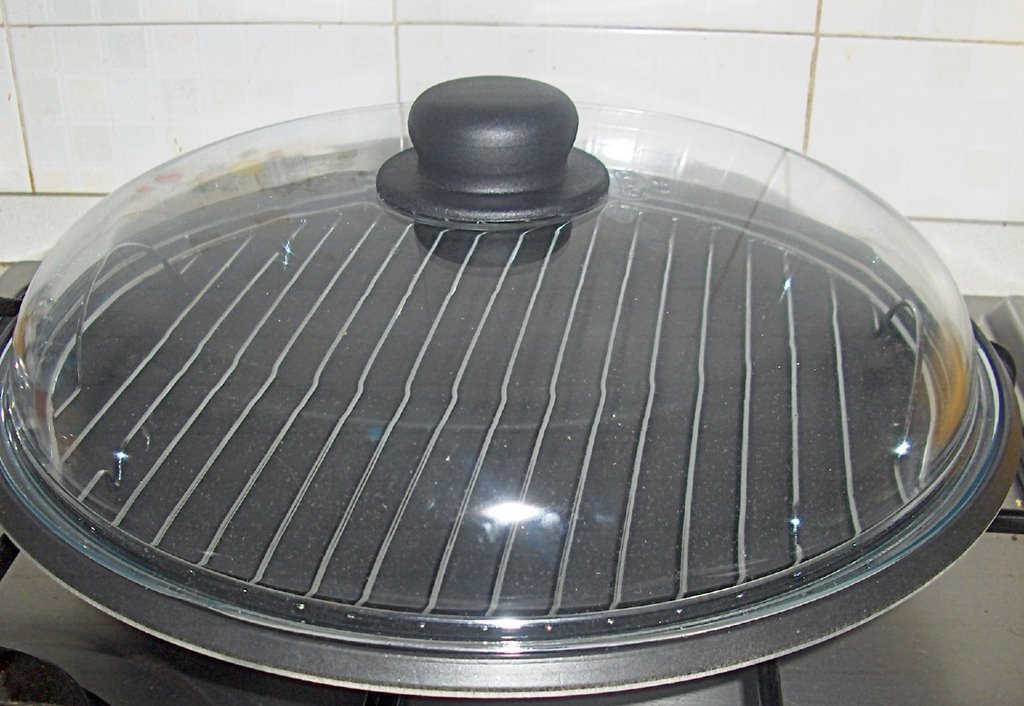
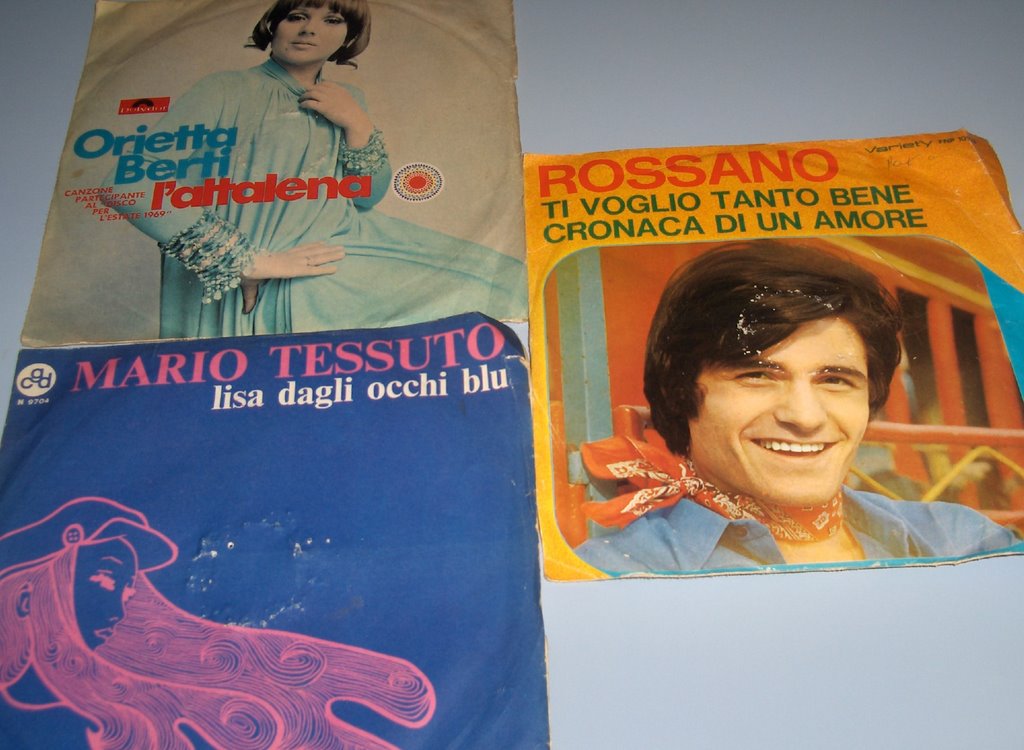
Here are the photos for the previous post: bancarelle, the testo romagnolo pan and the record sleeves.

A FESTA, A CONTRAPTION AND SOME NOSTALGIA

Yes, yet another festa tomorrow: this one's a holiday as it is that of San Pietro, whose statue will be carried around Modica Bassa. People put out offerings of local food which will be given to the needy afterwards.

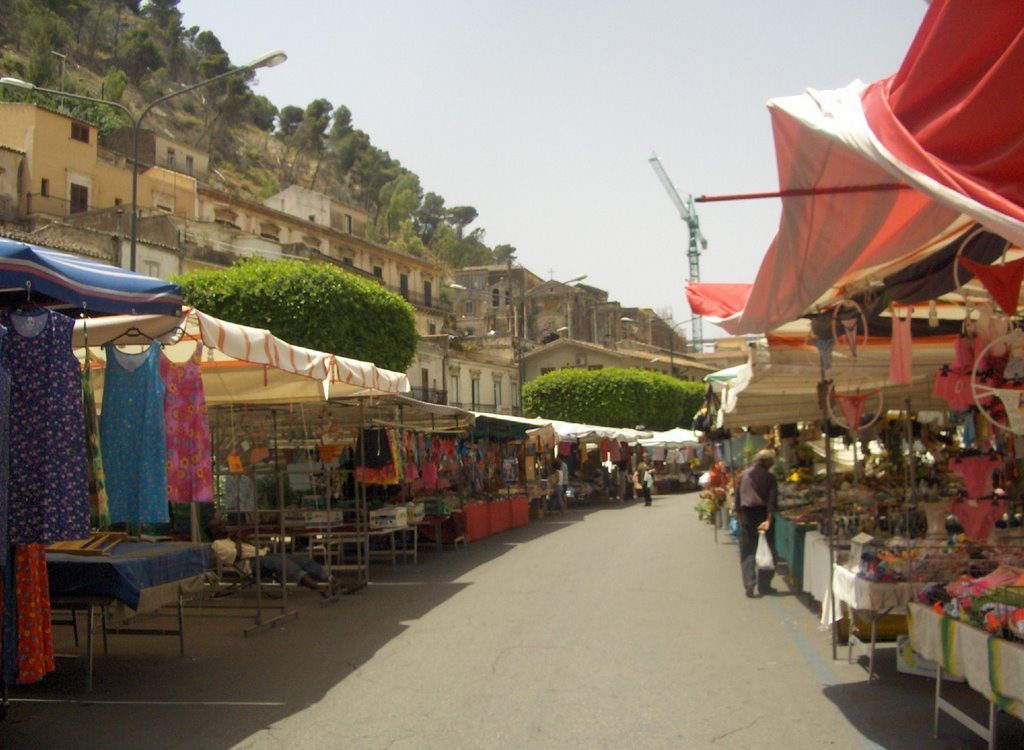
As part of the festivities there are long lines of bancarelle [stalls] down by the fountain area. Last year I bought the interesting pan you see in the photo* - a testo romagnolo - from one of these. It made a good substitute for a flat, unridged griddle pan when I wanted to make Welshcakes for the amici last St David's Day and I have also used it for fatless cooking, its real purpose. It's quite versatile but takes up as much storage space as a wok. Marco tells me that some people keep their receipts from the bancarelle from one Festa di San Pietro to the next, so that if there is anything wrong with their purchases, they exchange the items or get refunds a year later!

The singer Orietta Berti came last year to sing at the Duomo di San Pietro, an event which got me all nostalgic again for the days of [you guessed it!] 1969, when her catchy song, "L'Altalena" [= "The Swing"] was in the Italian hit parade. It was one of the records which all we students brought back with us that year, along with Rossano's "Ti Voglio Tanto Bene" [= "I Love You So Much"] which still makes me go all soppy. [The song was revived by the "Three Tenors" a few years back.] Then there was "Lisa dagli Occhi Blu" [= "Lisa with the Blue Eyes"] which Mario used to sing to me, changing Lisa's name to mine. I still have the discs, in their original sleeves, and for those of you who are as sentimental as I am, here they are in the photo*. Orietta Berti is still popular and I still play her Italian version of "Are You Lonesome Tonight?" when I feel low and want a wallow! I didn't go to the concert last year as I can no longer stand for long periods but I did hear her singing from outside the casetta [I hadn't moved into the flat at that time] and it took me back 36 years to when my love affair with Italy began!
So, as his festa a year ago reminded me of such a happy - and fateful - time for me, I hope San Pietro enjoys his outing and has a buona festa tomorrow!
* I am having to put the photos on the next post, as for some reason I am unable to upload them here. Pazienza!

Tuesday, June 27, 2006

ANOTHER FESTA


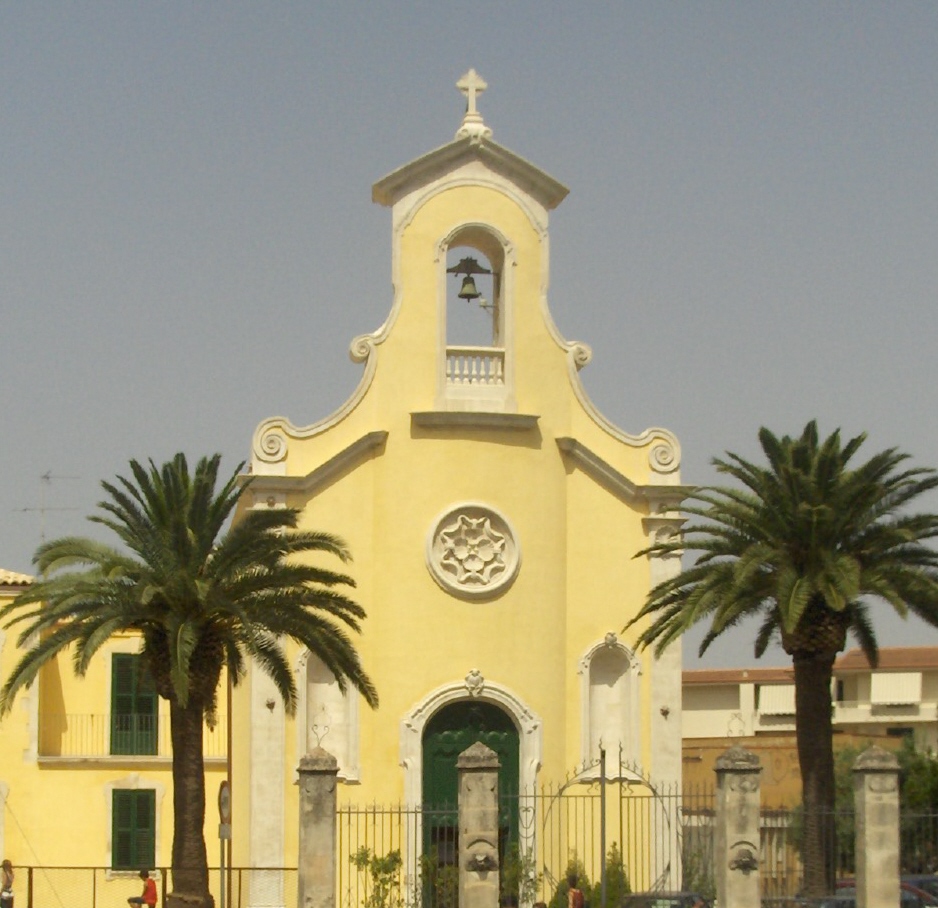
I omitted to write on Sunday about the Festa of the Sacro Cuore Church here. I was feeling the heat too much to go out and watch the Parade but in the evening I did hear it pass by to jolly music and could just see, from the balcony, the top of the statue of Christ being taken up the road. Again, it seems to me that joy in your religion is a good thing. Even up here in the flat, I felt uplifted by the event and caught up in the atmosphere. I'd seen pretty lighting hung around the church the previous evening, too.

I do love that charming little church and often go in to contemplate or to have a few words with God, whose mysterious ways I often don't understand or agree with. [I'm not a Catholic - not anything, really - but I am sympathetic to the Catholic faith.]

The photos show the little church as it used to be and as it is now, following a face-lift. I'm not sure which way I prefer it. If I were ever invited onto "Desert Island Discs" [dream on, Welshcakes!] one of my choices would be a recording of the bells of Sacro Cuore.

Monday, June 26, 2006

GOAL!

I wasn't watching the match - I was quietly reading the British newspapers online - but I knew when Italy scored a goal in the 93rd minute, all right! The entire street suddenly erupted in a collective cheer and there was prolonged whistling; car horns beeped even more loudly than usual; and even the neighbourhood dogs made approving noises! [Simi did not, however, as we are a very unsporty doggie and mummy!]

NO SICKIES, PLEASE!

Simi and I have just been for our afternoon walk and, whereas the streets are usually buzzing with activity at this time, today they are devoid of men. All those who didn't have to go back to work at 5pm are indoors watching Italy v. Australia, of course. The poor dears can't just "take a sickie" to watch it, as so many would in the UK., because here, as soon as you call in sick, they send the medico fiscale round to check you out!

Friday, June 23, 2006

NATURAL CURES

The health stores or herbalist's shops are excellent here and they give good advice. This morning I learned from the owner of one of them that almond oil can be used in the same way as tea tree. I have long been a devotee of aloe vera products, especially for the skin, and here, where the plant grows abundantly, it is believed to have cancer-fighting properties, too.

CHI VIENE AD ISPICA...

"Chi viene ad Ispica compierà 100 anni" = "Come and live in Ispica and you'll live to be 100", they say. [Ispica is a little town of charming balconies about 10 minutes away in the Siracusa direction.]

I was cheered to read* yesterday that an old lady was celebrating her 102nd birthday in a nursing home run by the nuns there. A big party was planned, to be attended by the Mayor and other dignitaries. Sadly, I read* today that the lady died at 10 am yesterday, exactly 102 years and 2 hours after she came into the world. So the flowers intended for her party are now on her coffin.

The party was also intended to be a tribute to the nuns and the good, kind and loving care that they undoubtedly give. In my opinion, they are still to be congratulated.
* Neither of the articles to which I refer is available online.

TOURISM - 3


Just two more photos for you today:

[1] Countryside at Camarina, an area of many Greek remains.
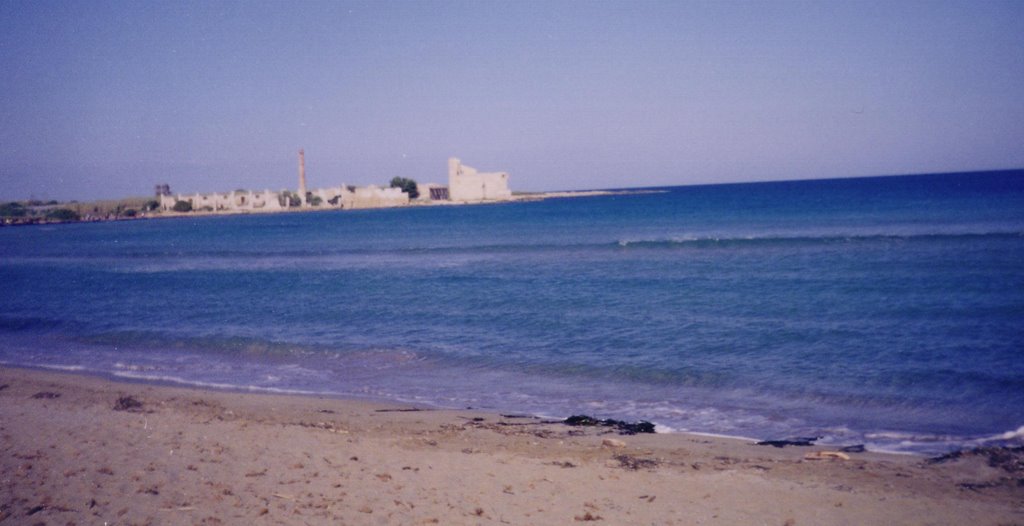
[2] At the Nature Reserve of Vendicari, looking across at the old tuna processing plant. Note the purple hues of the sea. The first time I went there, I thought, "I recognise that smell in the air" and then I realised it was the scent of zagara [orange blossom], from which they make a very good cologne here.

TOURISM - 2


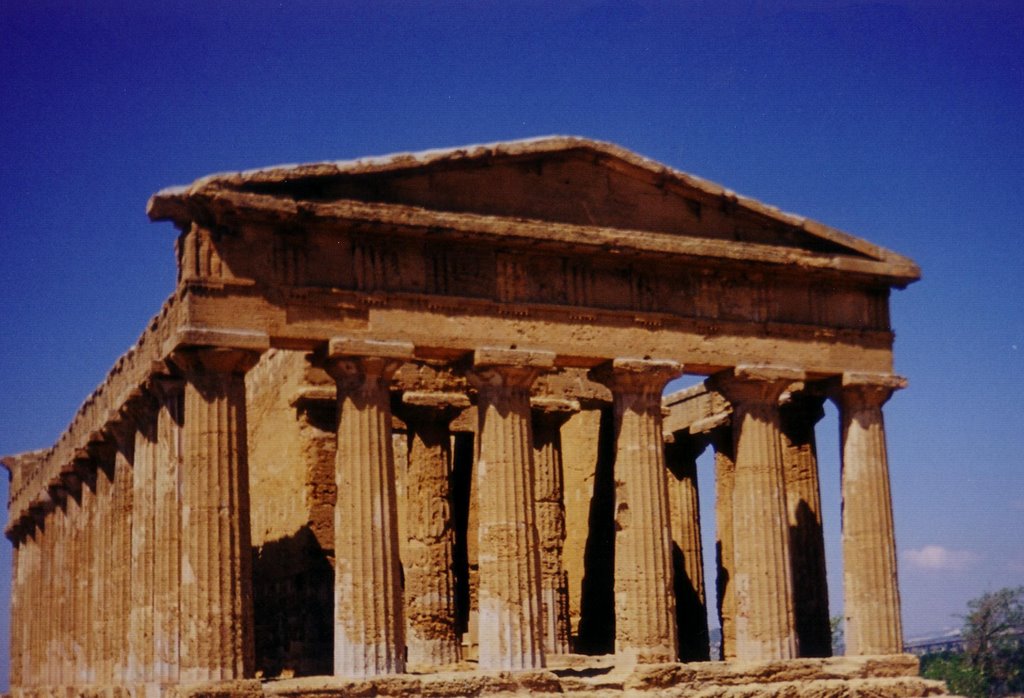
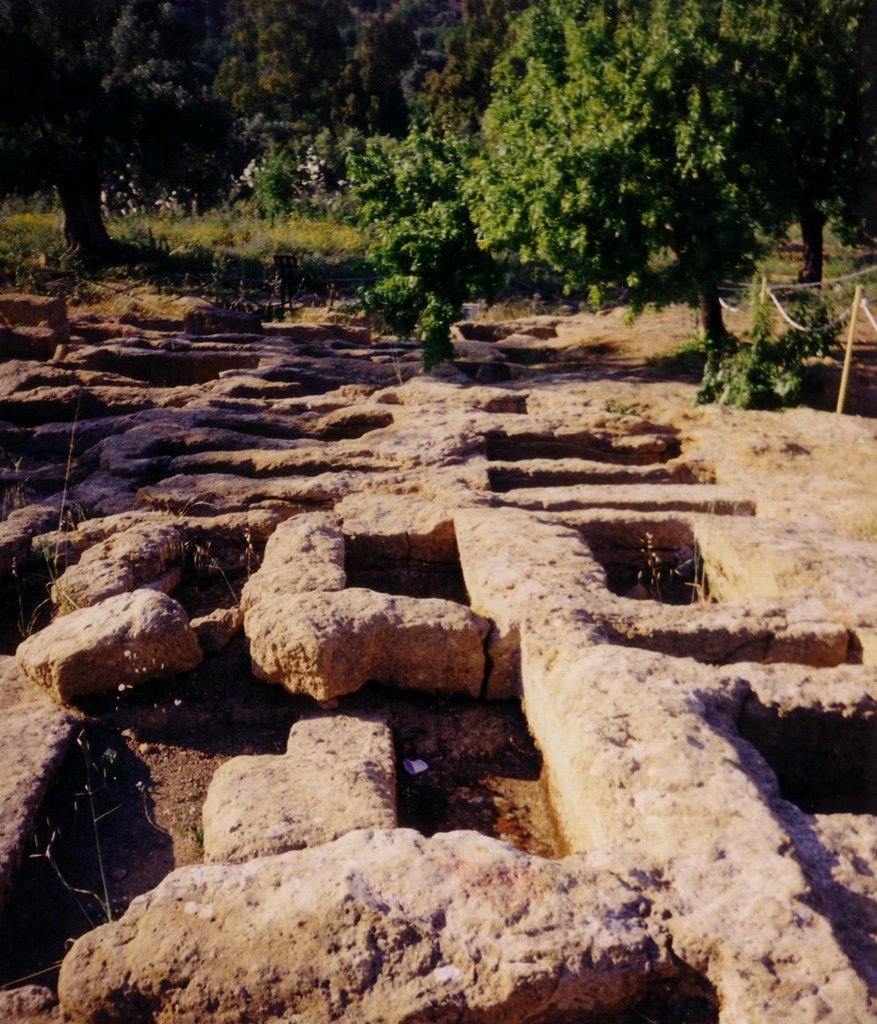
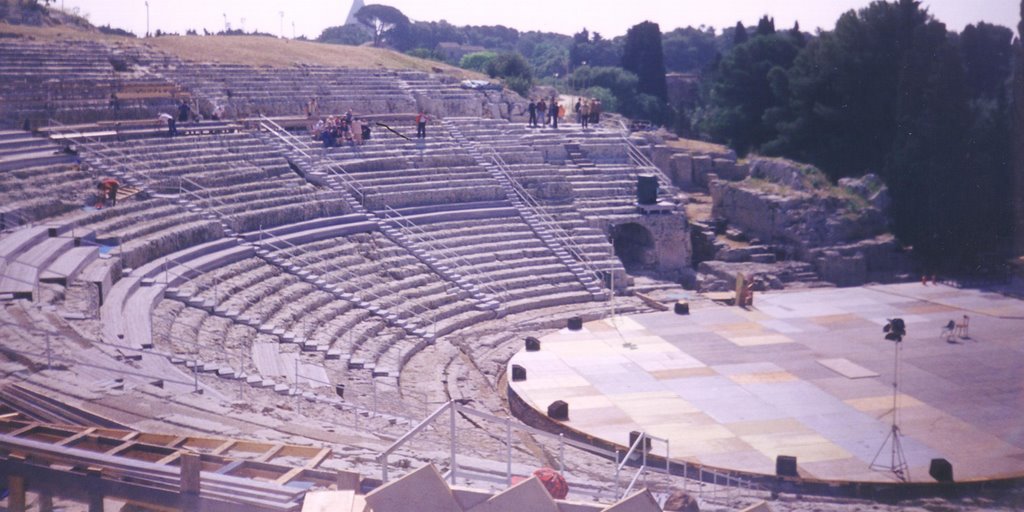
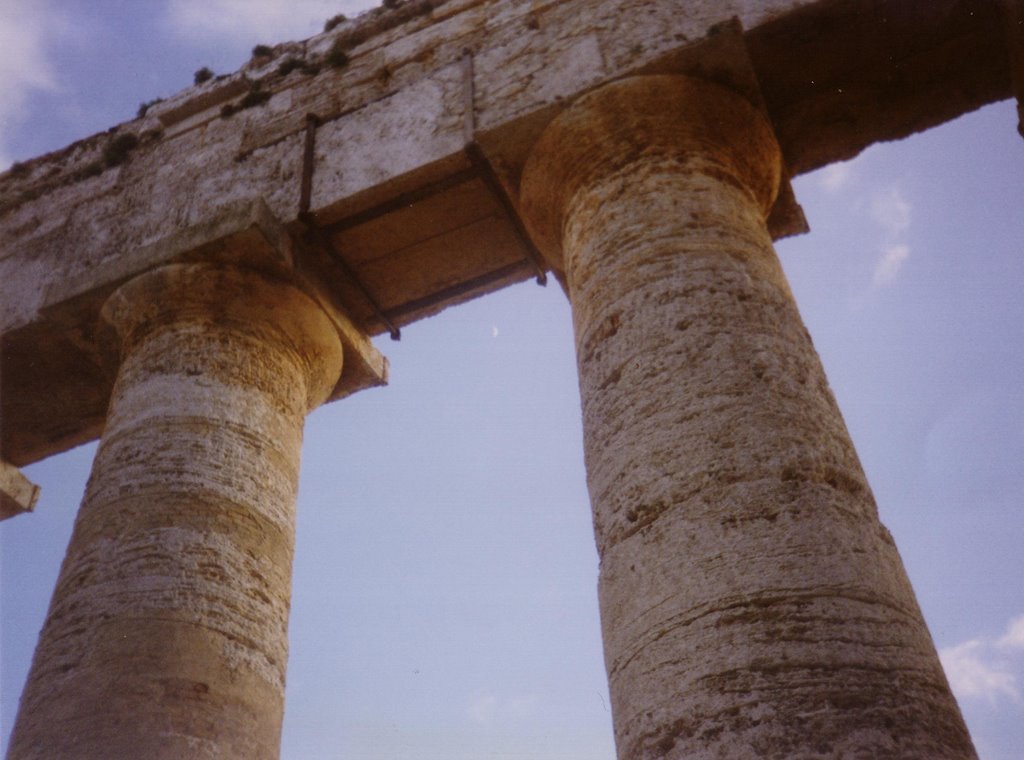
Here are a few photos to show you how varied the scenery of the island is and, hopefully, to whet your appetite for a visit!

[1] The Tempio della Concordia at Agrigento.
[2] Paleochristian tombs at Agrigento.
[3] The Greek Amphitheatre at Siracusa being prepared for a performance.
[4] Part of the Temple at Segesta.
[5] Modica - San Pietro.
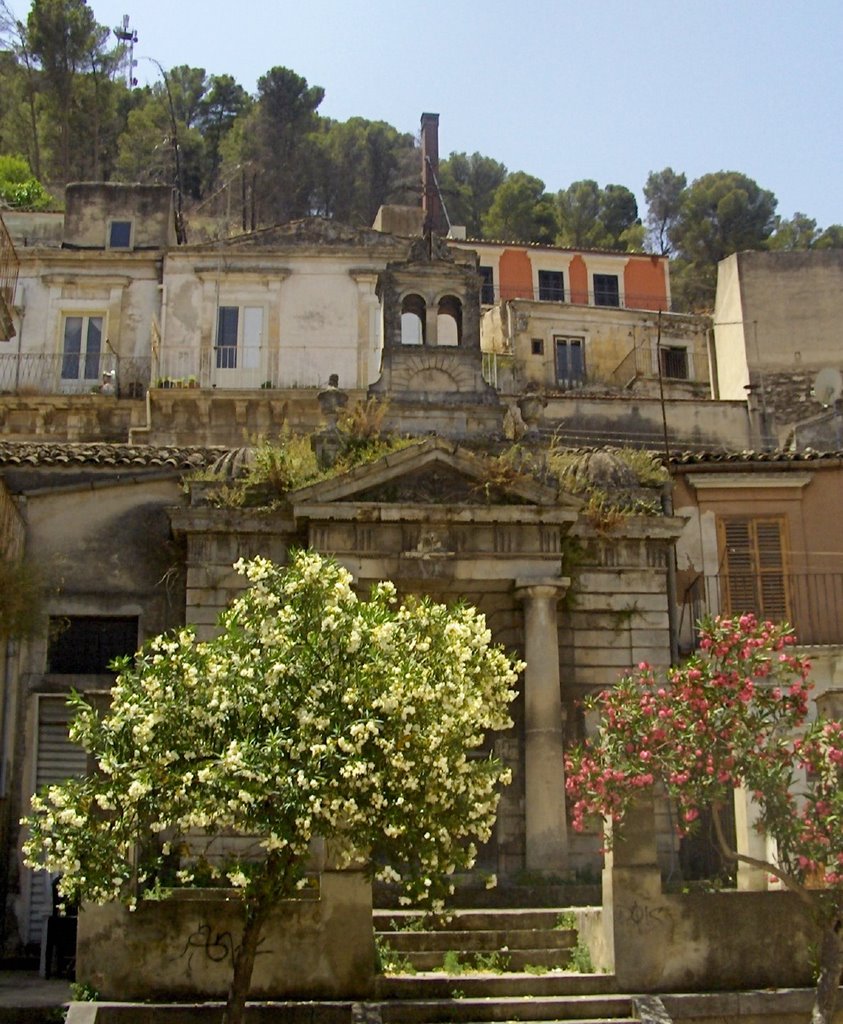
[6] Many Sicilian towns have "corners" which, with a little attention, could be charming. This, in Modica Bassa, is one of them.

Thursday, June 22, 2006

TOURISM - 1

I am often asked what image British people have of Sicily and what Sicilians can do to increase tourism. The one has to improve in order to augment the other. One word will come to the lips of most Britons when Sicily is mentioned; yes, you guessed it – “mafia”. They also imagine an extremely backward island of grinding poverty where everything is in decay. They know nothing of its natural resources, food, expanses of open country or its culture. Many of them, I’m ashamed to say, don’t even think of it as being part of Italy! Among the questions I was asked before I came [apart from, “Aren’t you scared of the mafia?”] were, “Do they have phones and internet?” and “Where will you buy your clothes?” Of course poverty exists here but professional people have a higher standard of living than their British counterparts and everybody seems to eat well. As I’ve mentioned elsewhere, the fashion shops, even in a small town such as this, are on a par with any that you could find on mainland Italy and technology is state-of-the-art, as you’d expect in the country of Da Vinci, Marconi, Volta and Zanussi.

Last year Modica staged its annual palio [medieval-syle horse race]* and I watched on TV as an interviewer desperately tried to seek out tourists to speak to. It soon became apparent that nearly all the tourists were from other parts of Italy, not further afield – well, I think they found one Japanese – and this is a pity both for the comune and for the potential tourists who are missing out on such an interesting place. So here is my advice to Sicilian mayors, tourist office and site managers , hotel and restaurant owners and anyone else who is listening!

[1] The single, most important thing you can do to encourage tourism on this island is, at tourist attractions, to stay open all day! Yes, I know you love your pranzo at home but it is no good telling someone who has got up at 5 am to get to you and who only has a day in your area to “come back tomorrow”. This happened to me once in Palermo; it had taken me ages to find the famous building in the heat – I forget which one – and when I got there at 12.45 I was informed, by the type of elderly custodian employed all over Italy for their ability to be unpleasant and hiss, that they were closing there and then and would reopen at 9am the following day. Even if you are going to reopen at 4 or 5pm., what is the tired tourist without a hotel base to do until that time, if everything else is closed as well? You can’t make your restaurant lunch last that long! I read a few months back that, even at a site as renowned as the Greek Theatre in Taormina, they are closing on some afternoons because they can’t afford to pay the staff! Come on, Sicily! This is ridiculous!

[2] Market the culture and market the island as part of Italy.

[3] Make places easier to get to! It is still impossible to get from Modica to Agrigento and back in a day, for example, and you cannot get to the part of Piazza Armerina where the mosaics are by public transport. You can get to the main town, but then you have to get a taxi to the site and it is quite a way. The first time I came to Sicily, I did manage to get to Agrigento and wanted to visit the nearby birthplace of the playwright Pirandello. What a palaver! I wrote in my diary of that time that “I found the bus but it went all round the suburbs on a circular route and took forever. I got to the Casa Natale at 12.55 pm but I pleaded with them and they let me in.” The Valle dei Templi in Agrigento is stunning, by the way; I wrote that “it took my breath away, like the first time I saw Florence.” And people in Britain don’t know it exists! – Nor will they, if the transport links to it are not improved. Even getting to less important places is not easy, because of the daft system for buying tickets: the Ragusa bus, for instance, stops at the tobacconist’s near the church here but you can’t buy your ticket there, oh, no! You either have to buy it in Modica Bassa the day before or you have to get off the bus at the terminus down there, run across the road to the bar to buy the ticket and run back! If this has caused me difficulties and I speak Italian, how do you expect the average tourist to work it out or do it? Also, make all bus stops more obvious and put some form of seating near them! It’s not rocket science!

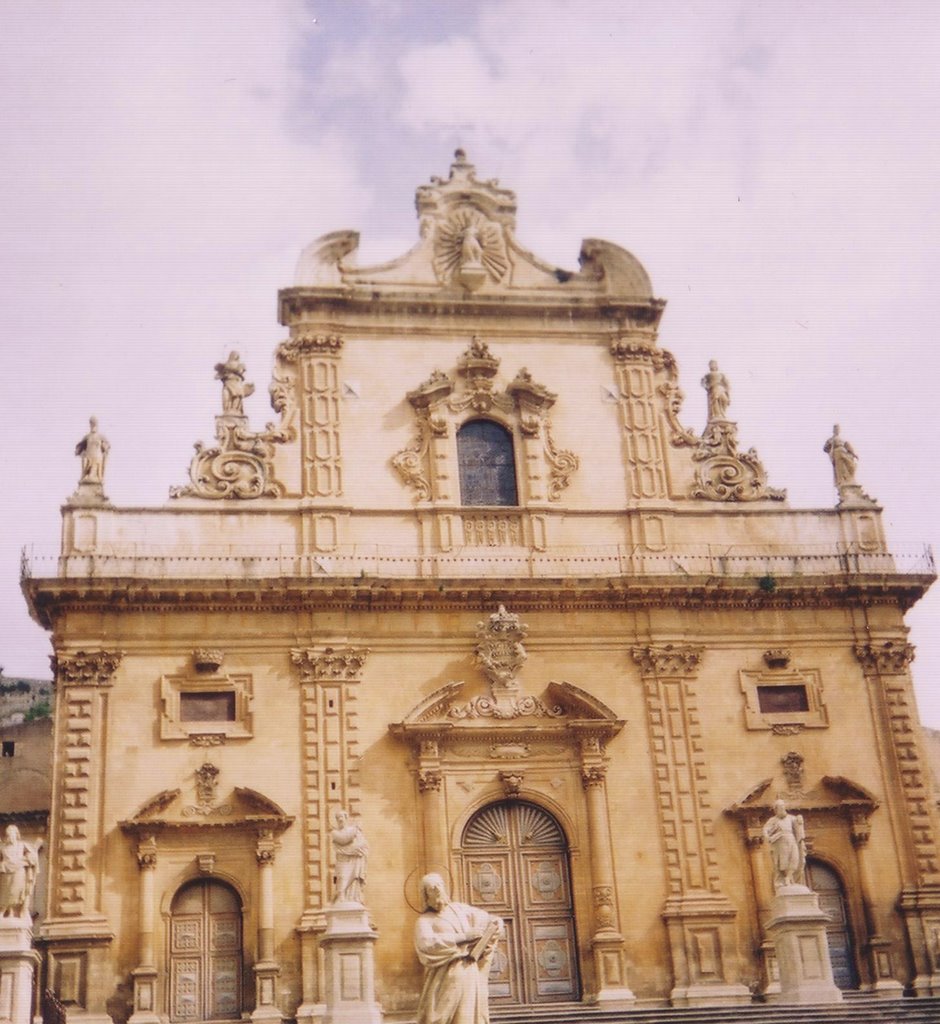
[4] Get on with restoration work. We all know it has to be done but sometimes here it just stops! I’d been coming here for years before I could get into San Pietro in Modica Bassa. Spare a thought for the tourists for whom this is a once in a lifetime trip!

[5] With regard to food, most tourists who venture this far will be happy and curious to sample the local fare. However, if you are going to use foreign names for food, serve it in a recognisable form to an American or Brit! For instance, if you put something called “hamburger” on your menu they will look for the bun! And warn them that a “bistecca” isn’t going to be like the steak they get at home. [The nearest you can get to that is the “fiorentina” cut.] Serve food hot, not tepid, stock spirits in all eateries and switch the heating on in them in winter!

Attend to these matters or the British, in particular, will declare that it was “very nice but I wouldn’t go again” and the following year they will return to Spain, where they feel looked after.

I don’t want the place to become like the Costa Brava but if you want tourists you do have to pay some attention to what tourists want, and make these things easier for them to obtain. I reckon anyone serving an English or American-style breakfast could make a fortune!

*I gather that this year there will not be a horse race as a horse fell last year and had to be put down, but there will be other ceremonies and a parade of horses.

Tuesday, June 20, 2006

FASHION NOTE - 4

A lot of floaty, transparent fabrics are being worn in layers, cut into handkerchief-style sleeves and hems.


It is hot, hot, hot here now so the sundresses have appeared.

In my opinion, one of the most elegant looks that Italian women wear is a simply cut, black dress or trouser suit accessorised only with big, turquoise-stone jewellery. They carry it off well.

Monday, June 19, 2006

GEL PHOTOS


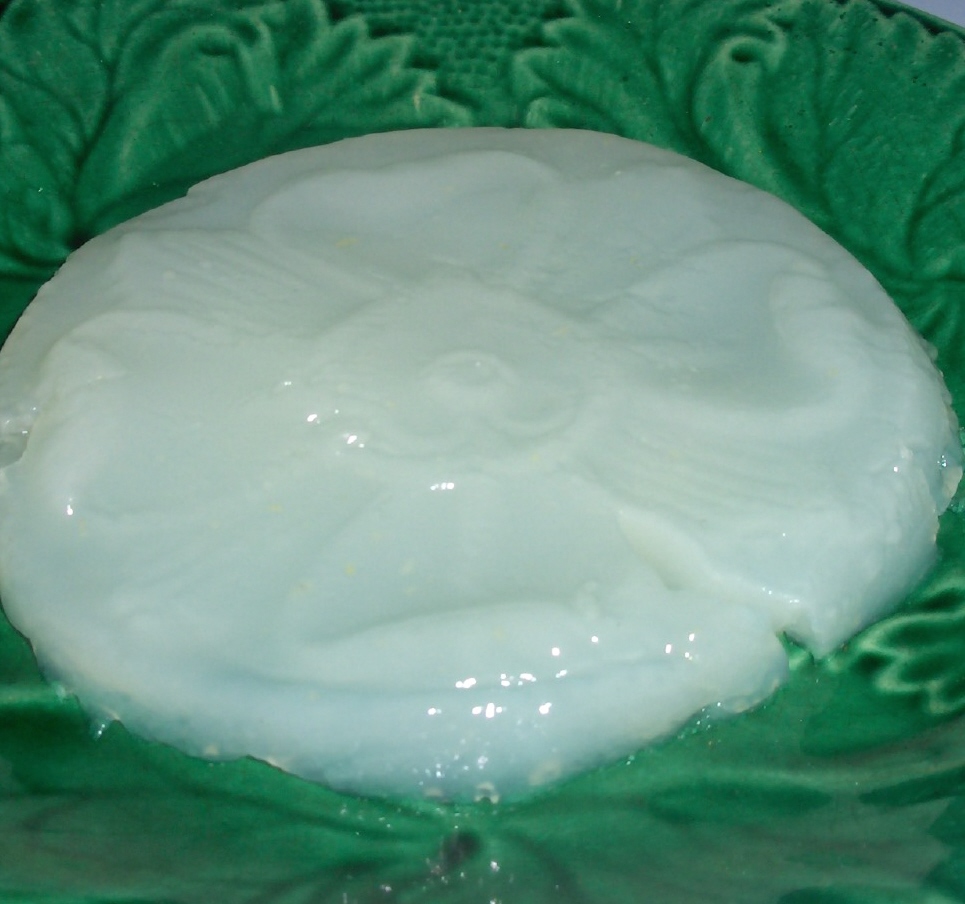
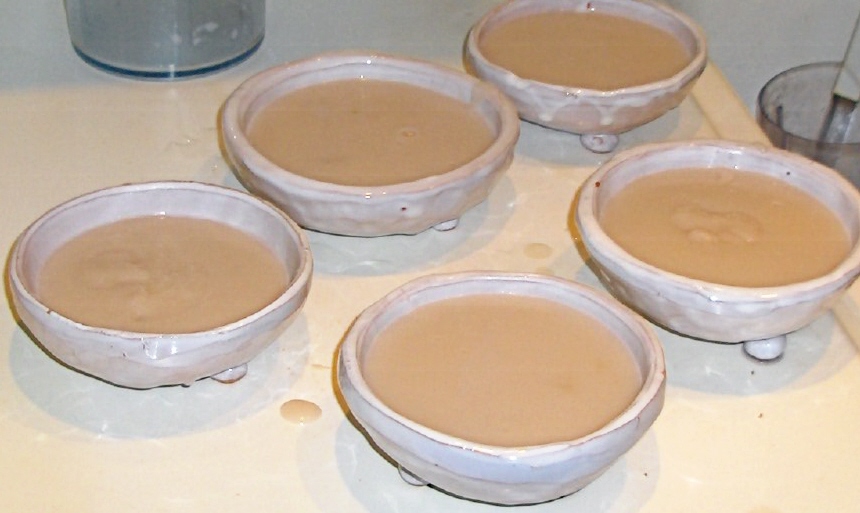
In the photos you can see Irma's gel alla mandorla, just after it was poured into the moulds, then cooling on her balcony, and gel al limone [on the green plate] which I made this very afternoon! See previous post for recipes.

GEL

Gel, made with lemon, almonds, cinnamon or a mixture of all three, is one of the most refreshing desserts that the Sicilians make.

A few weeks ago, Irma invited me to her home for a “masterclass” in the making of gel. Here are her recipes:

Gel al limone

6 lemons [use unwaxed ones in Britain]
1 litre water
90 - 100 grams cornflour
150 – 200 grams sugar

Grate the skin of the lemons into a bowl, or use a zester. Pour over the water and leave overnight. Strain into another bowl and stir in the cornflour and sugar. [There is some controversy over whether you should put in 90 or 100 grams of cornflour and whether you should use 150 or 200 grams of sugar. I used the larger amounts in both cases.] Heat gradually in a saucepan, stirring all the time. Let the mixture boil for 1 minute. Pour into wetted moulds or dishes and leave to set. Chill in the fridge. This quantity makes 6 – 8 servings, depending on the size of your moulds / dishes. Gina sprinkles cinnamon over her gel al limone and this looks very pretty.

Gel alla mandorla

200 grams fresh almonds
1 litre water
90 – 100 grams cornflour
150 – 200 grams sugar

Irma grinds the unskinned almonds in a food processor. She then squeezes them in a clean, thin cloth so that the almond milk pours into a bowl. Some people buy the almond milk ready-made here. Bring the milk to the boil, stirring all the time and carefully stir in the sugar and cornflour, making sure no lumps form. Let the mixture boil for one minute. Pour into moulds and chill as above.

Gel alla cannella

3 cinnamon sticks [the ones we get here are large, not those tiny things you get in small spice jars in Britain.]
1 litre water
90 – 100 grams cornflour
150 – 200 grams sugar

Pour the water over the cinnamon sticks in a pan. Bring to the boil and let it simmer for c. 15 minutes. Cool. When the mixture is quite cold [Irma says this is important] stir in the cornflour and sugar. Pour into moulds and chill as before.

Many thanks to Irma for allowing me to use her recipes here. I haven’t yet tried mixing the flavours but will let you know when I do!

Saturday, June 17, 2006

REFLECTIONS AFTER A YEAR

Some random thoughts:

Regarding the move, I seem to have done things the right way around, albeit by accident: if I had not had the use of the casetta for a few weeks after arrival but had just come out for a week before relocating in order to find somewhere to rent, I would not have had enough time to obtain the necessary documentation and utilities contracts [see “Bureaucratic Trail" post]. You really do need to be on the spot.

I could not have managed any of it without the help and support of kind friends in both countries. My friends here have been unstintingly loyal.

I had expected the nature of some of my friendships here to change – simply because you are not the same person, when you are the “settler”, as you were when you were the “visitor” – and it may yet do so. I do need to work on widening my circle but there is time for that.

Going through Culture Shock has been a humbling experience. You do come out the other side of it and you relearn what you value in both cultures. It is normal to “grieve” a little for what you have left behind.

Do not even think of making a change such as this unless you have at least a get-by level in the language and really I would say you need more than that. [It may be different if you want to go and live in an enclave of Brits somewhere but if you truly want to embrace the new culture the language is the key. It sounds obvious but I must emphasise it.] I have a degree in Italian and am fluent but I have nevertheless had my difficulties.

Do not assume that being an EU citizen will enable you to skirt round the bureaucracy. Check your entitlement to medical care meticulously.

As I sit in the apartment with Simi, perhaps watching BBC World, I reflect that I seem to have achieved the best of both worlds: indoors, I can live on a “little UK” planet when I want to, whilst outside the door I have the vibrancy, bustle, noise and colour of glorious, beautiful Italy. It is still, to me, the “land of lands”.

I do think I have proved that, “To get what you want, you have to give up a little of what you have.” And I really don’t know who originally said that!

Friday, June 16, 2006

MEDICAL MATTERS

I didn’t get around to registering with a doctor till December: I’d registered Simi with a vet first, as she is the more important of the two of us!

I did have an E111 form which would have covered me during the first couple of months but you are not supposed to use it once you are officially resident here.

All the books I read before coming indicated that, as an EU citizen, I would be entitled to medical care here as I was in the UK. WRONG! I have been caught out on this. It is my own fault, for, if I’d had the sense to check with the UK Department for Work and Pensions I would have been forewarned; but I hate financial stuff and choose to ignore the fact that I am fast reaching official retirement age.

If you are working in the new EU country, there is no problem, as you are paying contributions into that country’s system. As I understand it, it is also OK if you have retired at the official age for Britons. I, however, took early retirement from teaching on medical grounds and, although I have worked ever since, I have been paid on an hourly rate and have not received full pay during holiday periods. Therefore my National Insurance contributions only entitle me to limited cover: I had to apply for Form E106 from the DWP [which I couldn’t have done before I left as you have to have a permanent address in the new country] and I am covered until next January. Even if I did have more NI “stamps” paid, this form usually only covers you for a maximum of two years. After that, you are on your own! Some people may be covered again when they do reach 60 or 65 but this is unlikely in my case. So it is that an EU citizen can be without medical cover in an EU country! Surely this is an anomaly and surely something should be done about it. So many Brits retire early and live abroad now! I will have to get a private medical insurance, of course, and I need to do that soon. I am fuming about this! SO IF YOU ARE THINKING OF RELOCATING WITHIN THE EU, DO NOT GET CAUGHT OUT ON THIS ONE!

The question arises, being on a limited budget, would it have stopped me coming here if I’d known about this? - No, I’d already reached “now or never” point: you can always find a reason to hang on; “I’ll hang on till I get my state pension as well / till I can get another few thousand for the house / till I’ve got my stamps completely paid up”. How do you know you’ll be around? And meanwhile the years pass and the years become decades; then before you know it you’re an old woman.

Chi vuol esser lieto, sia:
Di doman non c’è certezza
wrote Lorenzo De’ Medici. [= “Be happy if you want to; there’s no certainty about tomorrow.”] Or, as Verlaine put it centuries later:
- Qu’as-tu fait, ô toi que voilà
Pleurant sans cesse,
Dis, qu’as-tu fait, toi que voilà,
De ta jeunesse?
[= “Hey, you there, crying all the time, what did you do? Tell me, you there, what did you do with your youth?”]

The health system as I've experienced it here is quite efficient: several GPs use the same surgery space on different days and most "receive" in several locations. I do not have to make an appointment with my GP; I just go and sit and await my turn [ a change from the UK where you can wait ages for an appointment!] though some doctors do use an appointments system. My monthly asthma prescription costs €4 to have filled and, as I've mentioned before, there are several conveniently located pharmacies. I received a free 'flu jab without any fuss back in the winter [as I would have in Britain] and you don't have to wait so long for routine hospital appointments.
Incidentally, my asthma is a lot better here whilst my arthritis is marginally worse - possibly because of the humidity in winter or possibly because of that thing I don't like mentioning - ageing!


Wednesday, June 14, 2006

MOVING DAY - AGAIN!

Towards the end of June last year I received a call from the Swansea removal company informing me that the container of all my worldly goods would arrive at the Port of Napoli on Friday, July 1st. They also asked me to “take a copy of your passport in” to the Neapolitan removal company which would handle things from there, for all the world as if Napoli were just around the corner! I faxed a copy.

On the morning of July 4th I received a call from the Italian company telling me that it had all cleared customs and would be with me early the next day. Hooray! It had been just over five weeks but seemed much longer.

So I came up to the apartment on the Tuesday morning and dear Gina, bless her, came along to provide moral support and in case there were any unforeseen problems; and thank goodness she did.

The removal men – one Beppe from Napoli and his mates [one of whom had the eyes of Frank Sinatra] arrived at around 10 am. Beppe, had he been a Spaniard, could have stepped straight out of Robert Louis Stevenson: long, ringleted, black hair tied back in a ponytail, drooping, black moustache and long, black beard, an enormous gold earring and sporting culottes and a gilet.

The first problem was that all the men had heavy Neapolitan accents and I found it difficult to understand a word they said – even Gina found it hard – and the second was that they announced that they couldn’t get the container up the road! Luckily Gina’s husband had thought there might be a problem and had told her of a nearby small removals agency that might be able to help. So we all marched down there and they said they would be able to transfer the contents of the container up to the condominio parking space but that we would have to wait 2 hours or so for them to finish another job! Well, there was nothing we could do about it so wait we did. The container was parked in a nearby street and, whilst the men went to a café for refreshments, Gina and I walked along to have a look at it. Neither of us could understand what the difficulty was and, to this day, I still don’t; if the water lorry, which is longer and wider, can get up the road and reverse into the condominio parking space, I don’t know why the container couldn’t have been thus manoeuvred! Gina pulled me away from the container rather quickly when I suggested we take a hammer to it, such was my anxiety to get at my stuff! [The hiring of the van and the men from the local removal company cost another €200, by the way, on top of what I’d already paid.]

Finally the transfer was begun and all you could hear for the rest of the day were shouts of “Ehi, Beppe!” as all 175 enormous packages were loaded into and sent up via the lift. Then you would hear Beppe muttering, “Meglio cinque pianoforti che tutti questi libri” [= “I’d rather shift five grand pianos than all these books”].

Now, I had paid to have everything unpacked by the men at this end but Gina, being more fussy about dust than I am, decided it would be better if the 4,708 books and 912 ornaments [!] remained in their boxes so that I could sort them a little at a time. I’d wanted the books unpacked and stacked so that I could sort them back into categories easily – I’d been horrified, in Cardiff, when the men said they would have to pack them in boxes according to their size, not their subject-matter – and I knew I wouldn’t be able to lift the boxes. But Gina’s word prevailed .

She had to leave at 2pm for a meeting at work and, although the cavalry arrived later in the afternoon in the form of Marco, a lot of other, larger items that should have been unpacked by the men were not. What could I do? They said they had a load to pick up from Messina that night and they could have cited the delay in the morning as the reason for not doing a full unpack. It was also a blazing hot day and we were all tired. I thought of complaining but, my imagination perhaps running away with me, I decided that, on the whole, I’d rather not have a visit from the Camorra [Neapolitan mafia] so, with Beppe literally breathing down my neck, I signed the form saying the service had been good. To be fair, I was also somewhat mollified by the fact that everything seemed to be there and the only thing that had got broken over all that distance was a flowerpot which didn’t matter; that does say something for both removal companies.

The thingamajig that should have held my bed together plus the special screws needed to reassemble a wardrobe were nowhere to be found – not the fault of the Italian company – so the first night that Simi and I moved in we slept on the settee; I could have slept anywhere that night! The next day I got a carpenter in and all was fixed efficiently and he put up some bookshelves, too.

I swear that the piles of books grew surreptitiously during the nights because, although I’d brought all my bookshelves with me, both freestanding and wall-mounted ones, there just wasn’t enough space to accommodate all the precious tomes. So I ended up purchasing three new bookcases here.

It took me till September to sort all the books back into categories [yes, I should have been a librarian!] partly because of the lifting involved and also because you could only do so much at a time in the heat. Marco’s son and his friend came to lift the final boxes.

And now, as I sit in the apartment, g and t in hand and shutters open during these balmy evenings of another summer, I gaze around at my ornaments, pictures and books, all here and all in place. And I think back to the events of a year or so ago and wonder how I managed to re-sort everything and where I got the energy to do so!

Tuesday, June 13, 2006

THE BUREAUCRATIC TRAIL

Dip into the work of any writer on Italy who has lived here – Tim Parks and Tobias Jones immediately spring to mind – and they will very soon mention bureaucracy, as do all books which give advice about settling here. Therefore I was forewarned about this, but still had to experience it to believe it!

I had found this apartment soon after my arrival, the owner being a friend of a friend, and the paperwork with regard to my tenancy was completed quite quickly and smoothly [though Linda did have to remind me that “Time stops at Messina” whilst I awaited the contract !] The other required documentation, however, was quite a different matter and without this it would have been impossible to move in as I wouldn’t have been able to obtain the contracts for electricity, water, gas and so on.

As an EU citizen, you are not supposed to need any documentation, other than your passport, in order to live here. Ha!! You just try it with only that! What you do need is the CARTA CEE – permission to stay for EU citizens – and the codice fiscale [a sort of National Insurance number] and in that office you will be told that you first have to have the CARTA CEE!

So, a friend having fixed us an appointment at the police station in Ragusa – that is the way things work here – Linda and I began to negotiate the bureaucratic trail last June. I had to take with me my passport plus a copy of all its pages, even the blank ones, photos and a bank statement showing my means of support. I was given a piece of paper proving I had applied for the CARTA CEE and was told to call them in two weeks.

Both Linda and I had understood – she from enquiries she had made here and I from my reading – that, with the above receipt, I could register with the town’s authorities and thus obtain the utilities contracts. Nope! Not on your nonna’s nelly! We were told that I would have to await the “real” CARTA CEE. We begged and pleaded and Linda almost shouted, fearing I wouldn’t be able to get any of the contracts – but they couldn’t help us.

Next we went to the Agenzia Entrate to obtain the codice fiscale. At first the clerk said it was impossible; I wasn’t Italian, I had no right, there was no precedent, etc., etc. I was nearly crying but Linda suddenly seemed to grow about six inches taller, demanded to see a manager and lived up to her surname of Churchill by delivering a speech worthy of the man himself whilst I rabbited on about having given up everything to come to Modica. The result was that they decided the code could be issued and a few minutes later I emerged from the office with another piece of paper displaying the number. I began to feel I existed again!

Armed with this “magic number” [and it really is, for you can do nothing in Italy without it], it turned out that I could, at last, apply for the contracts. For all but the landline one, we had to visit the various offices – the gas one being helpfully located in an out-of-the-way spot unreachable by public transport. You have to fill in miles [I mean kilometres!] of forms and then you receive more weighty documents by post and even the Italians aren’t too sure which bits you have to send back and which bits you keep!

I do have to say that my utilities were connected quickly and efficiently the very next day – though I had to wait till September for the internet connection – and then, at last, I could make arrangements to move in!

In due course, I received the “real” CARTA CEE [which is not a card but yet another piece of paper] and could finally register with the comune – where the clerks were all smiles this time - so that I could have the privilege of being sent a refuse collection bill. Before you are actually deemed to be a citizen of the town, however, you have to await a visit from the police – you are not told when they are coming – so that they can verify that you do live where you say you live and that you are not destitute. [My “visitation” lasted about two seconds.] I originally thought this was ridiculous but have come round to the opinion that, this way, the Italians do have an idea of who is in their country and where they are.

So, dear reader, if you are contemplating moving to Italy, do bring with you every personal document that you have, however irrelevant or unnecessary it may seem, and don’t assume that “because we’re all in the EU” your path will be smooth!

Sunday, June 11, 2006

MODICA DI NOTTE


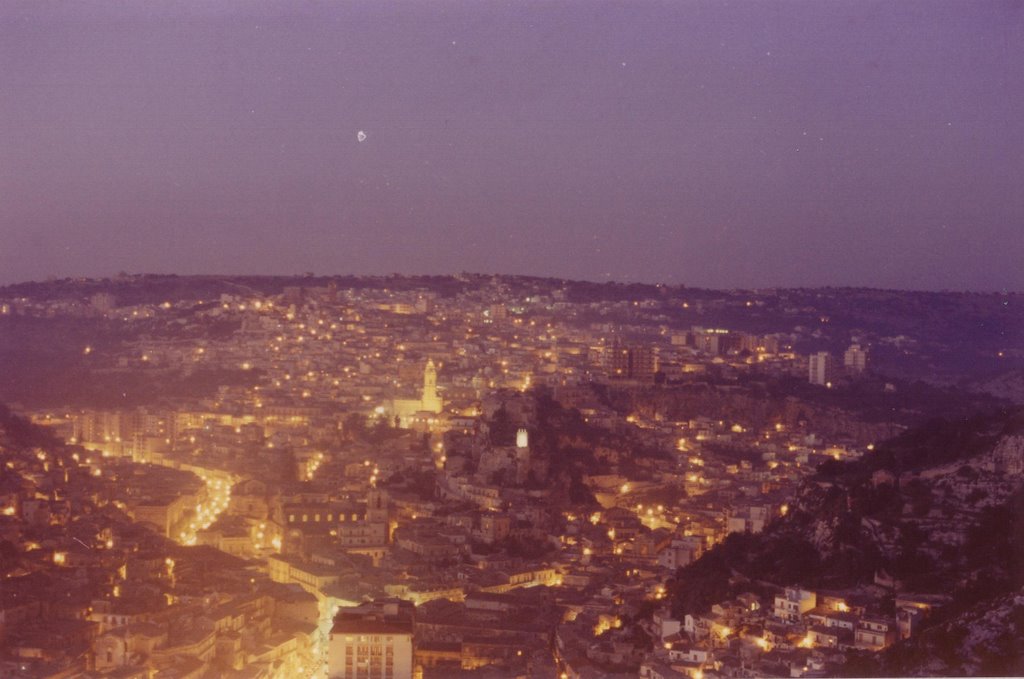
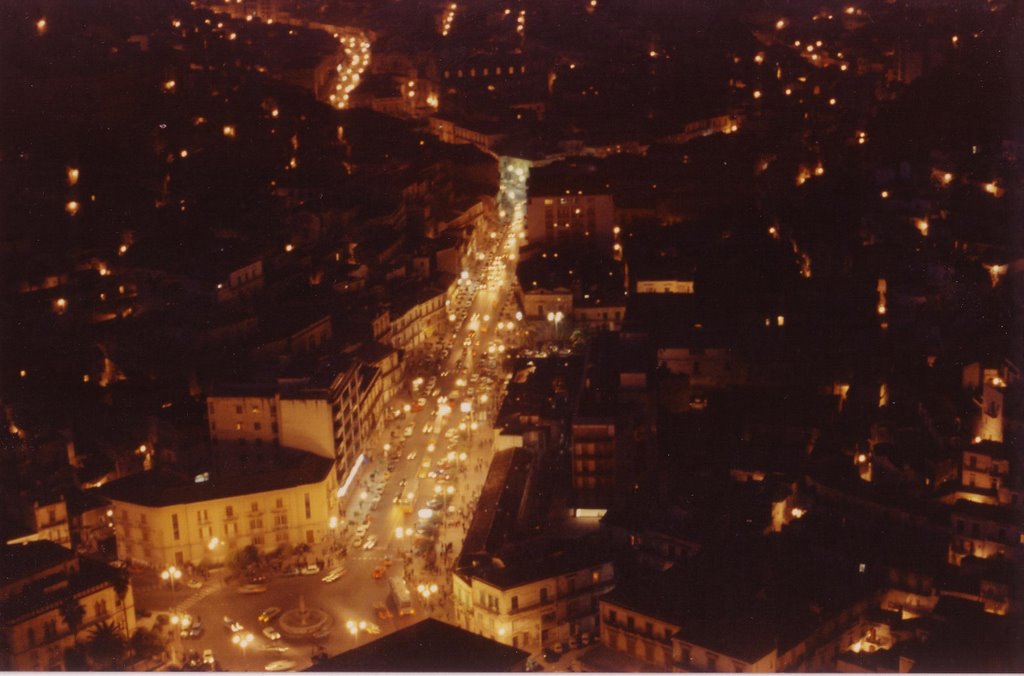
At night the town is softly and subtly lit and the effect is quite magical, especially when seen from the highest point. Nearby Ragusa is lit in a similar way.

Yesterday friends Giancarlo and Laura called to suggest we all go out for a pizza in the evening. So off we went to the "Irish Pub" in Modica Bassa and I must say they serve very good pizza there. [I can only ever manage about half of the enormous pizze they serve here, though.] Afterwards we strolled up to the Caffè dell'Arte for delicious cannoli; it was very pleasant and cool sitting at an outside table placed in the charming little street to the side of the café.

I love the animated atmosphere of Italian towns at night. In Modica the Corso Umberto [the main street in Modica Bassa] is closed to traffic from about 8pm to 10.30pm on Saturdays. This is not, as in some UK city centres [Cardiff being one of them], because the place is full of drunken yobs and "yobettes", but so that everyone can do the passeggiata - the walk up and down to see and be seen - in safety.

In Britain if you saw a large group of youths coming towards you, especially on a Saturday night, you would feel quite threatened. Here, they are out simply to socialise with each other and to have a good time innocently, so buon divertimento to them. [You would, of course, have to be more on your guard in larger towns all over Italy, particularly around tourist attractions.]

Saturday, June 10, 2006

SALES PITCH

You have to hand it to the Italians for business acumen: with the advent of the World Cup, the country has gone "offer" mad! According to an article [unavailable online] in La Sicilia today, you can buy a state-of -the-art TV now and, if Italy wins, you will get your money back. In addition, there are free flights available for every goal Italy scores against Ghana on Monday evening [provided you book in advance of the match]. The paper jokes that, in the event of an Italian win, Fisichella will drive round Silverstone in his underpants and Prodi will reverse the decision about the Messina bridge project! Of course, the article goes on to say, all the business people know the chances of an Italian win are slim, so they feel quite safe in promoting these offers.

I remember scenes of grown men crying in the streets when Italy was runner-up in 1970 and 1994. Do I take it that all the businessmen will cry publicly if the team actually wins this time?!

Counters


View My Stats